
One of the most common spinal issues that affects quality of life, causing chronic pain, movement limitations, and restricting daily activities, continues to challenge patients despite advances in conventional treatments such as medications, physical therapy, and surgical procedures. However, these methods do not always deliver satisfactory results, especially in chronic or advanced cases. This has led to the rise of stem cell disc treatment as a modern therapeutic option that targets the root cause of the problem rather than merely easing symptoms, making it an important and promising trend in spine medicine.
Stem cell disc treatment works by stimulating the body’s natural healing mechanisms within the intervertebral discs, promoting tissue regeneration and enhancing disc structure and function. Recent studies highlight the effectiveness of stem cells in reducing inflammation, improving disc flexibility, and significantly supporting spinal stability. This advanced approach has positioned stem cell disc treatment as a strong option for patients seeking an effective, relatively safe solution that avoids the potential complications associated with conventional surgical interventions.
What is a herniated disk?
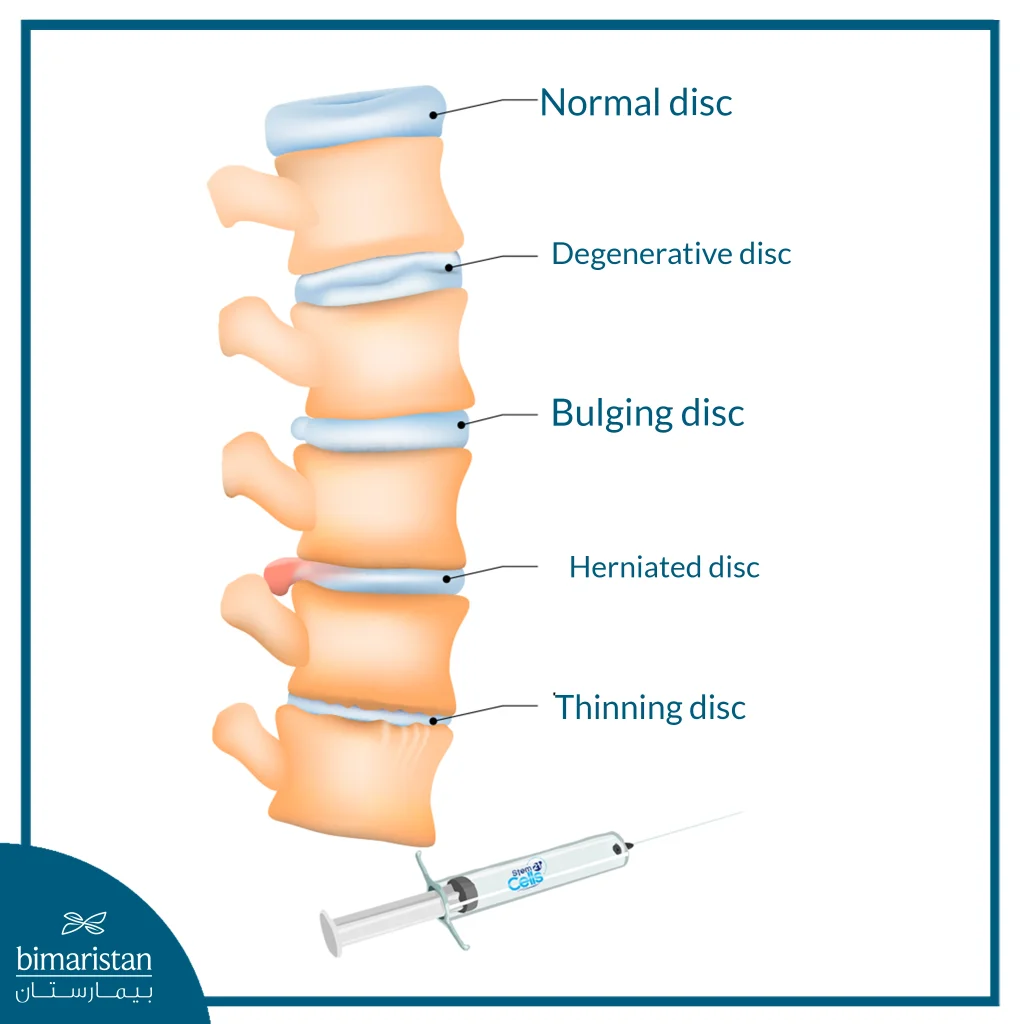
The disc refers to the cartilaginous disc located between the vertebrae of the spine, which acts as an elastic cushion that absorbs shocks and allows smooth movement between the vertebrae. This disc consists of an internal gelatinous nucleus surrounded by a strong fibrous sheath and plays an important role in maintaining the spine’s balance and stability.
When the disc is eroded or ruptured, its internal material may put pressure on the neighboring nerves, causing chronic pain, numbness, and impaired mobility to varying degrees. When the disc is eroded or ruptured, its internal material may press on neighboring nerves, causing chronic pain, numbness, and motor weakness in varying degrees. As the condition progresses, therapeutic intervention becomes necessary to avoid worsening symptoms and their negative impact on motor function and quality of life. The most important types of discs:
- Sliding disc: It occurs as a result of the protrusion or slippage of the internal nucleus through the fibrous sheath, which leads to direct pressure on the spinal nerves. This type is characterized by severe pain that may radiate to the limbs, increases with movement or prolonged sitting, and is the most common type in the lumbar and cervical vertebrae.
- Degenerative disc disease: Caused by degenerative changes associated with aging or chronic stress, the disc gradually loses its elasticity and height, leading to constant pain and stiffness in the spine. This condition may be associated with obvious limited mobility, making stem cell disc treatment a good option in the early and middle stages.
Causes of a herniated disc
The most important causes of a herniated disc are degenerative and mechanical factors that lead to the weakening of the cartilage structure and loss of its ability to absorb shocks:
- Aging: As we age, cartilaginous discs lose water content and elasticity, making them more susceptible to cracking and gradual slippage.
- Repetitive physical exertion: Carrying heavy weights or making sudden, awkward movements puts constant pressure on the disc, leading to wear and tear over time.
- Sitting incorrectly for long periods: Sitting in an incorrect posture, especially for extended periods, increases pressure on the vertebrae and disrupts the load distribution on the discs.
- Obesity and weight gain: Excess weight puts extra strain on the spine, increasing pressure on the discs and increasing the risk of disc slippage.
- Weak back and abdominal muscles: Weak supporting muscles reduce spinal stability and cause the discs to bear more strain than normal.
- Injuries and accidents: Accidents or direct trauma can lead to severe damage to the disc, especially in the lumbar or cervical vertebrae.
- Genetic factors: Genetic factors play a significant role in predisposing individuals to developing disc issues, as their cartilage may be structurally weaker from the outset.
- Lack of physical activity: A sedentary lifestyle leads to muscle weakness and spinal stiffness, which increases pressure on the disc and accelerates its damage.

Is it possible to treat a herniated disc with stem cells?
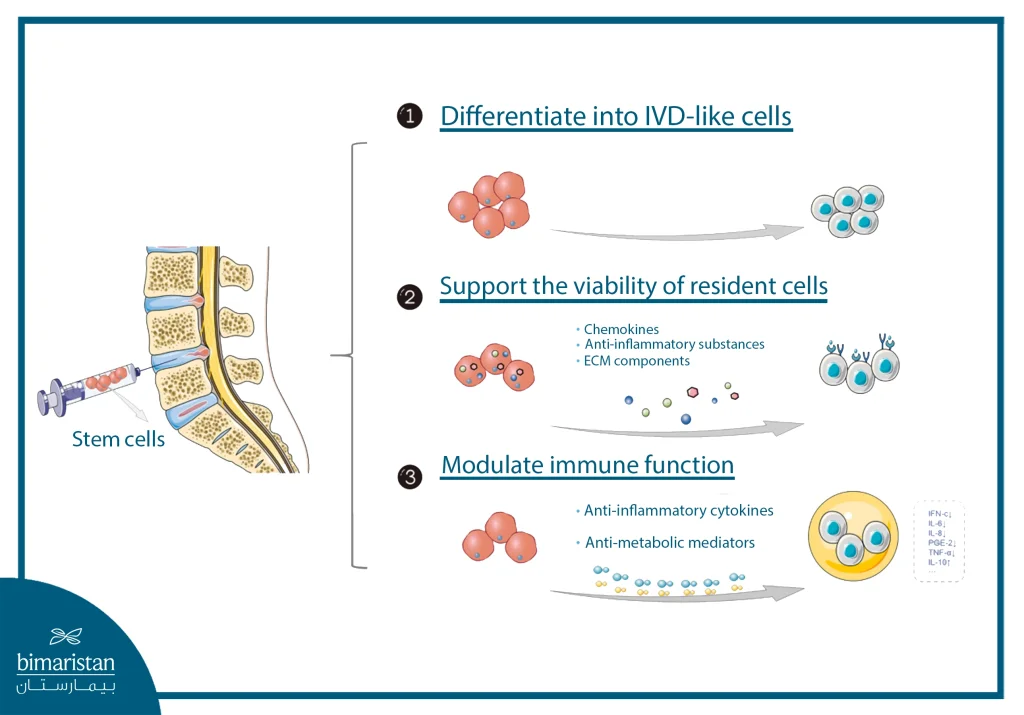
Yes, stem cell disc treatment is a promising new treatment option in the field of spine medicine, playing a pivotal role in repairing damaged disc tissue and naturally reducing inflammation, thereby contributing to pain relief and gradual improvements in mobility. This treatment relies on stem cells’ ability to stimulate disc self-healing and rebuild damaged cartilage, distinguishing it from conventional treatment methods.
In addition, it can be compared with or combined with other treatment modalities, such as injection disc therapy and endoscopic disc therapy, but stem cell disc treatment remains the most effective option when true tissue regeneration is required. Thanks to this vital role, stem cell disc treatment has become an effective medical solution to improve spinal function and quality of life for patients, while minimizing reliance on painkillers and long-term medications.
How to treat discs with stem cells
Stem cell disc treatment is based on a structured medical protocol that aims to repair cartilage damage and improve intervertebral disc function in a safe, non-surgical manner in most cases. It is applied after careful evaluation of the spine condition radiologically and clinically. However, the most important steps of stem cell disc treatment include:
- Comprehensive medical evaluation: Treatment begins with a detailed clinical examination, supported by an MRI or CT scan, to determine the extent of disc erosion and the size of the slip, and to ensure there are no complications requiring immediate surgical intervention.
- Choosing the source of the stem cells: The cells are usually derived from the patient’s own bone marrow or adipose tissue, which minimizes the risk of immune rejection and increases the safety and effectiveness of the treatment.
- Cell processing and preparation: The cells are isolated and laboratory‑processed according to strict standards, including increasing their concentration and activating them before injection to ensure greater ability for tissue regeneration
- Local anesthesia: Before the injection, the patient is placed under local anesthesia to minimize pain with careful monitoring of vital functions during the procedure, making the procedure safe and comfortable.
- Radiation-guided injection: Cells are injected into the affected disc using interventional radiology or CT guidance to ensure precise delivery to the targeted area and achieve the best treatment outcome.
- Stabilization and support after injection: The patient may be asked to use a spinal support brace or avoid vigorous movements for a short period to help ensure the cells remain in place and to promote natural healing.
- Physical rehabilitation program: This includes follow-up measures, daily activities, and light strengthening exercises for the muscles surrounding the spine to support the results of the injections and improve motor flexibility.
- Regular follow-up: Clinical and radiologic evaluations are performed after several weeks or months to confirm treatment success and the cells’ effectiveness in rebuilding the disc and improving symptoms.
Benefits of stem cell disc treatment
Stem cell disc treatment is based on stimulating tissue regeneration and naturally reducing inflammation, which improves spinal function and reduces chronic pain:
- Improved disc flexibility: Stem cells regenerate the inner nucleus and improve the elasticity of the fibrous sheath, promoting better spinal mobility.
- Reduce chronic pain: Treatment reduces inflammation and relieves pressure on the nerves, gradually relieving chronic pain.
- Rebuilding damaged tissue: Stem cells help repair damaged cartilage and stimulate the growth of strong, flexible new tissue.
- Delay the need for surgery: The treatment offers patients the opportunity to postpone or avoid conventional surgical interventions in many cases.
- Improves the functional stability of the spine: Supports the muscles and joints surrounding the affected disc, reducing the risk of slipping or future injuries.
- Reduced reliance on medications: Therapy reduces the need for painkillers and anti-inflammatories, minimizing their potential side effects.
- Promotes natural healing: Stimulates the body’s natural ability to repair and heal tissues, making the results sustainable over the long term.
- Improved quality of daily life: With reduced pain and improved mobility, patients can return to their daily activities more comfortably and effectively.
Tips after stem cell disc treatment
After completing stem cell disc treatment, adherence to medical guidelines plays a pivotal role in achieving optimal results and enhancing treatment effectiveness. Some of the most important tips after the treatment include:
- Relative rest: It is advisable to avoid sudden movements and intense activity during the first few days after the injection to allow the stem cells to stabilize and begin tissue regeneration.
- Follow-up physical therapy: A gentle, thoughtful rehabilitation program that helps strengthen the muscles that support the spine, improve flexibility, and reduce pressure on the discs.
- Avoid heavy lifting: During the first few weeks after treatment, you should refrain from lifting weights or bending awkwardly to avoid any additional pressure on the affected discs.
- Maintain proper posture: Sitting and standing properly support the spine and help stem cells function efficiently.
- Drink enough water: Good hydration helps improve the disc’s internal tissue environment and supports cellular regeneration.
- Refrain from smoking and alcohol: These habits negatively affect blood circulation and tissue regeneration, which can reduce the effectiveness of treatment.
- Regular medical follow-up: Visiting your doctor for regular checkups and radiographs helps assess the disc’s response to treatment and adjust any supportive measures as needed.
- Eat a healthy diet: A diet rich in protein, vitamins, and minerals supports healing and natural cartilage regeneration.
Advantages of stem cell Disc treatment in Turkey
Turkey is one of the leading countries in the field of stem cell disc treatment, combining the expertise of doctors and modern treatment techniques:
- High medical expertise: Treatment relies on highly experienced spine and stem cell specialists.
- Modern technologies: The use of advanced equipment to ensure the accuracy of the injection and the effectiveness of the stem cell disc treatment.
- Favorable cost: Compared to some other countries, Turkey offers advanced treatments at competitive prices.
- Comprehensive follow-up: Careful follow-up programs to ensure successful treatment and optimal results.
- Convenient medical tourism: Provides integrated centers that combine high-quality treatment, accommodation, and health services.
Today, stem cell disc treatment is considered one of the most advanced and effective options for patients suffering from damaged discs and chronic spinal pain. Research shows that this treatment helps regenerate injured tissues, reduce inflammation, and significantly enhance functional mobility, leading to more stable long‑term outcomes compared to conventional methods. It also allows patients to reduce their reliance on pain medications and improve their overall quality of life.
In addition, stem cell disc treatment in Turkey offers several advantages, including highly experienced specialists, modern medical technologies, affordable treatment costs, and close medical follow‑up to ensure optimal results. Thanks to this progress, patients can regain normal activity with greater confidence while minimizing the risks associated with conventional surgeries. Ultimately, this treatment stands out as an innovative and promising solution for anyone seeking to improve spinal health and restore mobility safely and effectively.
Sources:
- Munda, M., & Velnar, T. (2024). Stem cell therapy for degenerative disc disease: Bridging the gap between preclinical promise and clinical potential. Biomolecules and Biomedicine, 24(2), 210-218.
- . (n.d.). Mesenchymal stem cells for lumbar degenerative disc disease (NCT03692221). U.S. National Library of Medicine.
- ational Institutes of Health HEAL Initiative. (2023, March 23). Helping the body heal itself: Injected stem cells for back pain. U.S. Department of Health & Human Services.