
Hand joint dislocation occurs when any of the wrist bones come out of place and is classified as a serious injury, as it can lead to a complete loss of hand function if not treated properly.
In this article, we discuss hand joint dislocation, its causes, symptoms, and treatment options. Follow us in this article, which provides you with all the necessary information to understand this injury.
What is a hand joint dislocation?
Joints are formed when several bones come together. Dislocations occur when the bones that make up a joint move out of place, creating a separation between two or more bone surfaces.
The wrist bones are located on the upper part of the hand. These bones connect the arm, which contains the forearm bones (ulna and radius) at the top, with the metacarpals at the bottom. Any movement of these bones out of their normal position leads to a hand joint dislocation.
There are 8 wrist bones in humans, these bones are covered by a set of ligaments that connect these bones to each other and ensure ease of movement, tearing the ligaments in this area can lead to the separation of one of these bones and dislocation.
Hand joint dislocation in its various forms
Hand joint dislocation joint may be caused by the dislocation of any of the eight bones that make up the wrist bones in the hands, but the most common form of dislocation of the hand joint usually occurs in the scaphoid and lunate bones, these bones that connect with the other wrist bones of the hand adjacent to it as well as the bones of the forearm, there are a number of other different patterns of hand joint dislocation, including:
- Anterior dislocation of the lunate
- Vertical dislocation: In this pattern, the ligaments around the bone are torn.
- Galliazzi fracture: This is a dislocation of the radioulnar joint with a radius fracture.
- Montague fracture: A fracture of the ulna with dislocation of the lower end of the radius.
Causes of a hand joint dislocation
- Most wrist dislocations are caused by a strong force acting on the joint of the hand:
- Severe sports injuries
- Falling on an outstretched hand
- A severe injury due to a traffic accident can cause concomitant dislocation fractures.
Symptoms of hand joint dislocation
The following signs and symptoms are present in a person with a dislocated hand:
- Severe pain that flares up when you move your hand.
- Difficulty or inability to move the hand, noting muscle weakness in the hand area.
- Numbness and numbness in the fingers of the hand, due to the pressure of the dislocated carpal bones on the carpal tunnel (where the nerves pass through).
- Hand bruising and swelling.
Any dislocation of the hand can be accompanied by other injuries to the arm, fingers, or even the shoulder or neck. Injuries to other joints in the body, such as shoulder dislocation or elbow joint dislocation, may occur when the bones that make up the elbow joint come out of place, and occur with the same mechanism and causes that lead to a dislocation of the hand.
Anatomical diagnostics for the dislocation of the hand joint
There are a number of injuries and diseases where the symptoms and location of the injury are similar to a dislocated hand joint, including:
- Carpal tunnel syndrome
- Fractures in the hand
- Rheumatoid arthritis
- Soft tissue injury to the hand, such as torn ligaments
Diagnosis of hand joint dislocation
Methods for detecting and diagnosing a dislocated hand joint include the following steps:
Clinical examination
When the patient arrives, the doctor inquires about the patient’s medical history, if he suffers from chronic diseases or is taking medications, and then inquires about the cause of the injury, after completing a detailed report on why the patient came to the ambulance and the details of the accident leading to his injury, the doctor will examine the location of the pain complained of by the patient, test the special strength of the hand, and the doctor will move the arm and hand in several positions to examine their range of motion, to determine the location of the dislocated bones and injured ligaments.
Radiography
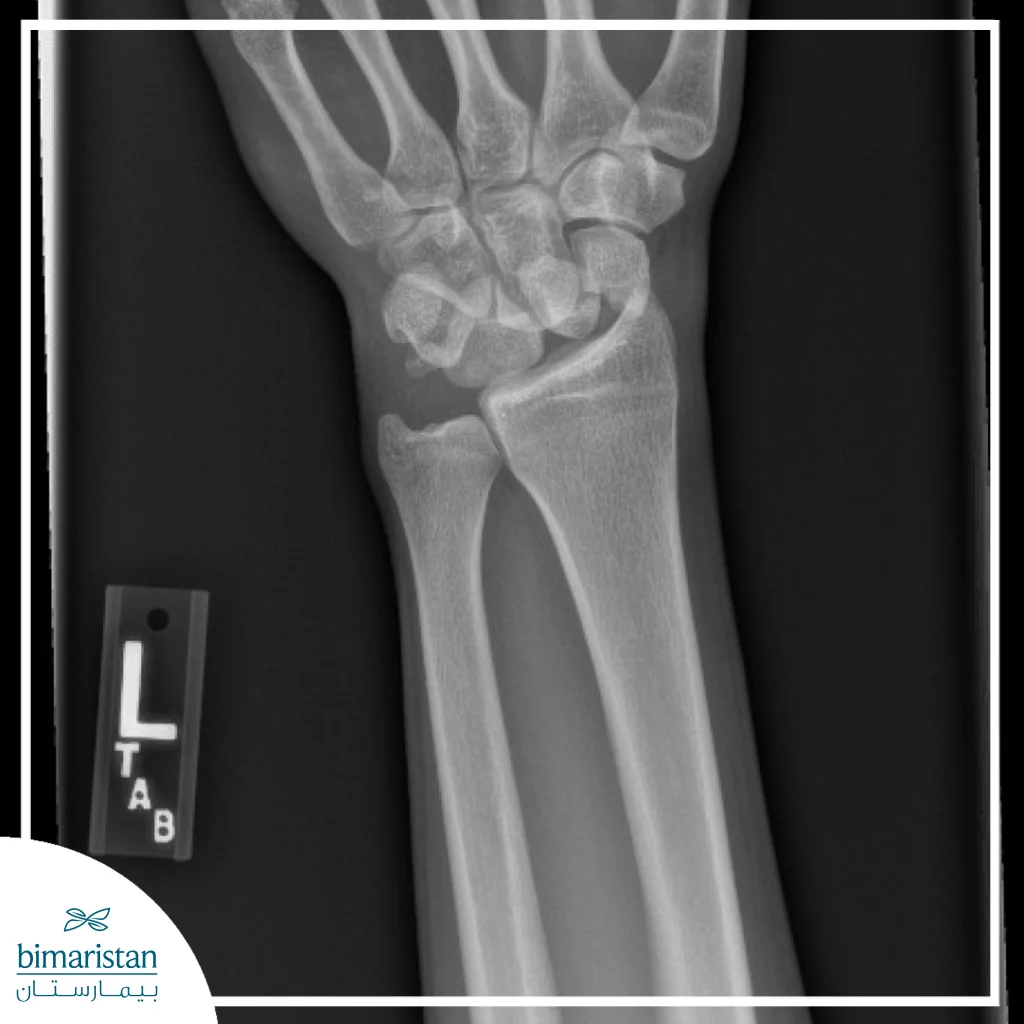
Clinical examination alone can detect dislocated bones of the wrist and hand, but radiographs confirm the injury and rule out other possible lesions, including radiographic diagnostic methods:
- X-rays: A simple image of the hand and arm can confirm the diagnosis of wrist dislocation.
- Magnetic Resonance Imaging (MRI): It is required if the doctor suspects a complete or partial sprain of the hand ligaments, as it provides an accurate picture of ligament and soft tissue position.
Treating a dislocated knuckle
The management and treatment of dislocated wrist bones is divided into:
Conservative treatment
For minor dislocations, the use of:
Closed reply
A procedure in which orthopedic surgeons restore a dislocated palm joint (after it has been diagnosed and seen radiographically) by performing manual maneuvers in the form of pulling, stretching, and rotating the hand, in order to return the bones to their original position.
Splint
After the procedure, a splint is applied to the hand joint to stabilize the hand.
Surgical treatment
In more severe injuries, surgery can be used to repair the dislocation of the carpal bones and return them to their rightful place, this surgery can be performed by opening the skin and showing the bones visually, and using nails and screws to hold the dislocated bones in place, surgery can also repair torn ligaments, and after surgical treatment, it is advisable to wear a cast for up to two months.
Physical Rehabilitation
Whether after conservative or surgical treatment, physical rehabilitation physicians administer exercises to help restore muscle strength and normal hand movement and to avoid complications from prolonged joint immobilization.
In conclusion, hand joint dislocation is considered an ambulatory injury, it can include dislocation of the wrist bones or dislocation of the lower end of the forearm and radius bones, clinical examination alone can diagnose dislocation, but simple radiographs are required to fully confirm the diagnosis and exclude complications and fractures associated with dislocation, treatment methods vary depending on the severity of the dislocation and its association with other findings, as it may include closed return and return or surgical intervention.
Sources: