
Intrauterine insemination (IUI) gives hope to many couples who want to have children but are unable to do so for some medical reason, as it is one of the effective methods of treating infertility in Turkey.
Overview of infertility and the Intrauterine Insemination (IUI) procedure
Infertility is defined as the inability of a couple to conceive despite a full year of marriage and regular sexual intercourse without using contraceptives.
Infertility is a common problem among couples, with studies indicating that 15% of married couples suffer from infertility, whether the cause is due to infertility in the man or the woman.
There are many causes of infertility, some of which are related to a health problem that the man suffers from, such as varicocele, or an issue that affects the woman’s fertility, such as endometriosis. In both cases, the essential step to managing infertility is to know the cause and treat it.
Many couples have recently resorted to IUI to increase their chances of conceiving. The IUI process has proven successful in increasing the chances of conceiving by about 20% per trial.
The IUI process can be repeated several times, but most doctors recommend a maximum of six trials before moving on to another method of treating infertility, such as IVF.
What is IUI?
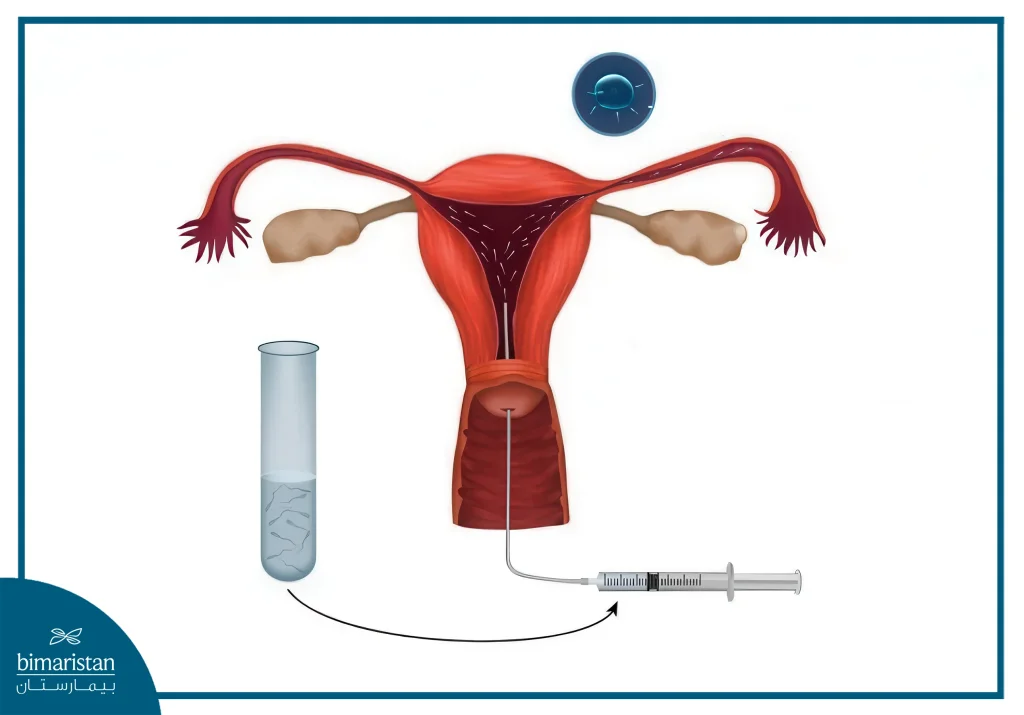
IUI is a medical procedure that aims to improve the chances of conception by injecting the man’s semen directly into the woman’s uterus. A sample of the man’s sperm is taken and injected into the uterus using a small needle during the woman’s ovulation period.
Natural pregnancy occurs when the male’s semen is ejaculated into the woman’s vagina. The fluid then moves through the cervix into the uterine cavity and from there to the fallopian tube to fertilize the egg.
The IUI process shortens this path by injecting the semen directly into the uterus, helping avoid sperm loss and facilitating access to the egg, especially in cases of blockages or mucus accumulations in the woman’s reproductive tract or a low sperm count in the man.
IUI is one of the first methods used to treat infertility. It is easy to apply, quick, taking no more than 45 minutes in standard cases, and generally safe.
If you undergo IUI, your doctor will often prescribe ovulation-stimulating medications beforehand to release more than one egg, increasing the likelihood of fertilization and pregnancy.
Your doctor will determine the time of ovulation, typically around day 14 of a regular cycle. A sperm sample is then taken, and the most active sperm may be isolated in the laboratory to boost success rates.
The sperm is injected into the woman’s uterus during ovulation, and the couple then waits for the results. While IUI increases the chances of conception, it does not guarantee pregnancy.
In what cases is IUI used?
IUI is used to treat infertility cases of various causes, whether the cause is related to male fertility, such as low sperm count or poor sperm motility that prevents sperm from reaching the female egg to fertilize it.
IUI is also used when there are problems that hinder sexual intercourse between spouses, such as erectile dysfunction, or when the husband has a physical disability that limits his ability to have sexual intercourse.
On the other hand, the IUI process is used to treat female infertility resulting from many causes, the most important of which are:
- Endometriosis
- Changes in the cervical mucus (the presence of very thick mucus that prevents the passage of sperm)
- Infertility resulting from ovulation problems, such as its absence or a decrease in ovarian reserve (due to aging)
- Polycystic ovary syndrome
- Idiopathic infertility
Types of IUI
There are two methods for performing intrauterine insemination:
Intracervical injection (ICI)
It is a simple procedure that can be performed in the outpatient clinic or at home using special syringes for home use, where the man’s semen is injected into the cervix, and care must be taken to sterilize these syringes to avoid transmission of infection.
The woman is asked to lie down for about half an hour after the injection to allow the sperm to move into the uterus and then to the fallopian tube for the fertilization process.
Intrauterine Insemination (IUI)
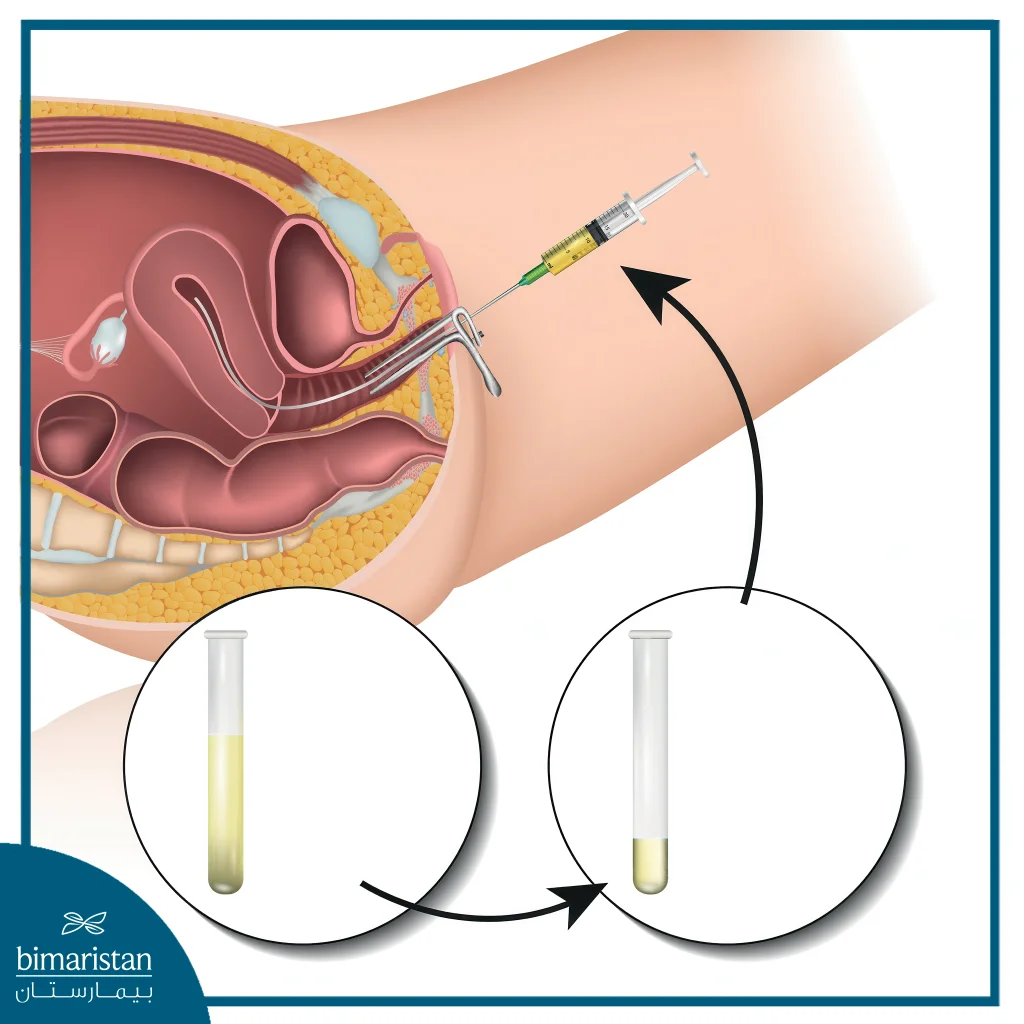
In this method, semen is injected directly into the woman’s uterus using special syringes. This process requires greater precision, and its steps are similar to the intracervical injection.
Sometimes, the semen is washed before being injected into the uterus to clean it of proteins that may hurt the fertilization process in the uterus. The most active sperm can also be isolated in the laboratory for injection.
The success rate of artificial insemination
The success rate of IUI depends on many factors, including the wife’s age, the cause of infertility, and correctly following the doctor’s instructions.
The woman’s age plays a significant role in IUI success. As age increases, egg quality and fertilization ability decline, so older women often need multiple trials.
Determining the time of ovulation is essential for IUI success. Ovulation usually occurs mid-cycle. The doctor schedules IUI to match ovulation, and the woman must adhere to this date without delay.
The underlying cause of infertility also affects IUI success. Women with endometriosis or fallopian tube lesions have somewhat lower success rates, and IVF is often recommended in these cases.
According to studies, the success rate of a single IUI trial by age group is:
- Women under 35 years old: 13%
- Women 35–37 years old: 10%
- Women over 40 years old: 3–9%
IUI can be repeated if pregnancy does not occur, but it is recommended to limit attempts to six before considering IVF. Another study showed that after six IUI trials, the cumulative success rate reached approximately 40%, indicating that multiple attempts can increase pregnancy chances.
IUI offers hope to infertile couples by improving their chances of conceiving, and it has proven successful for many patients.
Risks of IUI
Of course, IVF is a largely safe procedure, but no medical procedure is free of the possibility of complications or side effects, including:
- Some women experience cramps or light bleeding after the procedure
- Complications resulting from ovulation-stimulating medications, such as multiple pregnancies
- Infection resulting from the use of contaminated syringes
- Swelling or redness at the injection site
Many rumors link IVF to an increased risk of fetal abnormalities. This is untrue, as no proven study links the two.
Signs of successful artificial insemination in Turkey
Signs of success and pregnancy do not appear until at least two weeks after the procedure, so what is rumored about the appearance of symptoms of successful artificial insemination from the first day is just a rumor.
In the event of a strong desire for pregnancy in the wife, psychological symptoms may appear that are somewhat similar to the symptoms of pregnancy. Hence, the signs of successful artificial insemination after two days are not sure of the success of the procedure because they may be due to psychological and emotional reasons.
The only way to determine the success of the artificial insemination process is a positive pregnancy test, which is delayed in appearing for about 14 days after artificial insemination.
The signs of successful artificial insemination are similar to the signs of natural pregnancy, which include fatigue, nausea, vomiting, change in breast size, and cessation of menstruation.
What is the difference between artificial insemination and IVF?
Both are methods of treating infertility and increasing the chances of pregnancy in couples suffering from infertility.
IVF is often the next option after IUI, meaning that IUI is tried first as a means of treating infertility. When IUI fails, IVF is considered.
Before IVF, the doctor prescribes medications that stimulate ovulation in the wife to produce more than one egg per cycle to increase the chances of fertilization. The eggs are then surgically removed from the ovary and placed in a tube.
A sample of the husband’s sperm is taken to complete the egg fertilization process in the laboratory. The fertilized egg is then transferred and implanted in the wife’s uterus.
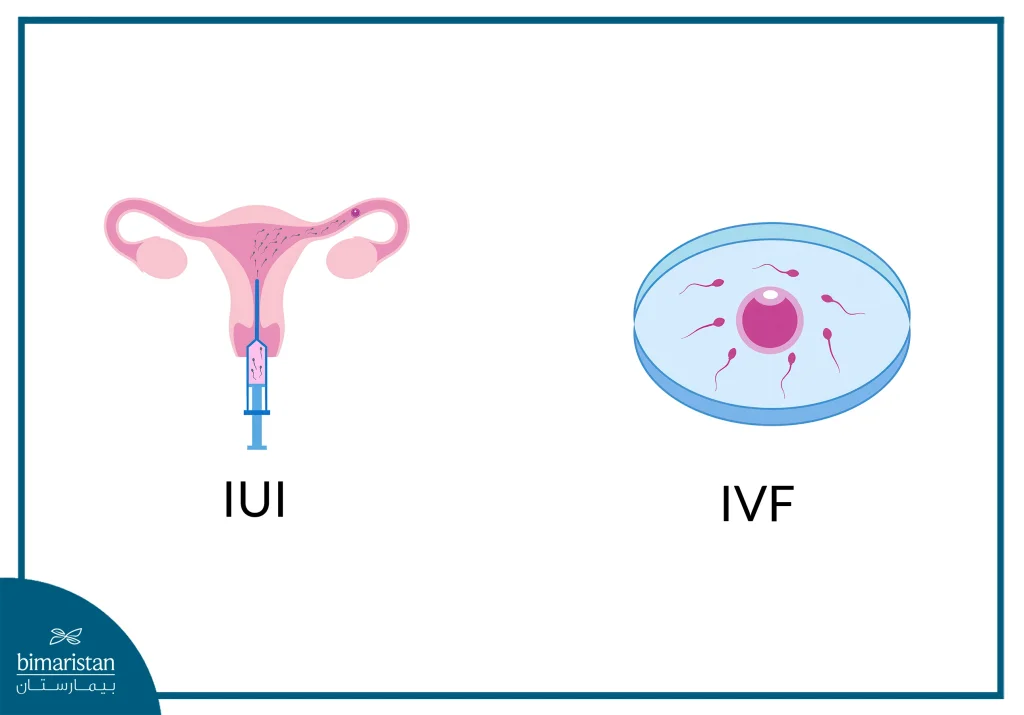
The difference between IUI and in vitro fertilization (IVF) is mainly the place where the egg is fertilized. In IUI, fertilization occurs in the wife’s body, while in IVF, fertilization occurs in a laboratory tube.
What are the causes of intrauterine injection failure?
Many reasons may contribute to the failure of intrauterine injection, including:
- Weakness of the uterine lining and the inability of the fertilized egg to nest in it
- Poor quality of eggs or sperm
- Advancing age of the wife
- Uterine fibroids
- Fallopian tube diseases
- Error in performing the procedure
Undesirable effects of IUI
IUI may result in some undesirable effects, including an increased likelihood of multiple pregnancies with more than one fetus (twins) due to ovulation-stimulating medications given before the procedure.
Multiple pregnancies result in an increased likelihood of severe complications for the fetus, such as miscarriage or premature birth.
In addition, ovulation-stimulating medications may result in ovarian hyperstimulation syndrome, which is accompanied by ovarian swelling and abdominal pain, in addition to nausea and vomiting.
Tips after the intrauterine injection procedure
After completing the IUI procedure, the woman can normally return to her daily activities. Still, it is preferable to avoid bathing in hot tubs or saunas for about two weeks after the procedure.
You must be patient after the IUI procedure to know the results. Do not rush to take a pregnancy test immediately after the procedure because the test is often negative before at least 14 days have passed since the IUI procedure.
Suppose the IUI procedure does not succeed in causing pregnancy. In that case, the procedure can be repeated once, twice, or three times before moving on to another method of treating infertility, such as IVF.
Get some rest after the procedure. There is no need to overthink the results, which do not appear for at least two weeks. If the results are negative, there is no need to be sad. The IUI procedure can be repeated several times, or other methods of treating infertility can be tried.
Sources: