
In modern medicine, fighting lung cancer is no longer limited to conventional painful surgery and long recovery periods. Today, thanks to robotic lobectomy, patients receive more precise and safer treatment, with smaller incisions, less bleeding, reduced pain, and a faster return to normal life.
This advanced technique provides the surgeon with 3D vision and superior instrument control, ensuring tumors are removed efficiently while preserving as much healthy tissue as possible. The result is greater patient comfort, improved outcomes, and a more humane treatment experience. Robotic lobectomy is not just a medical option; it is an investment in quality of life, combining innovation with the advanced care every patient and their family seeks.
What is robotic lobectomy?
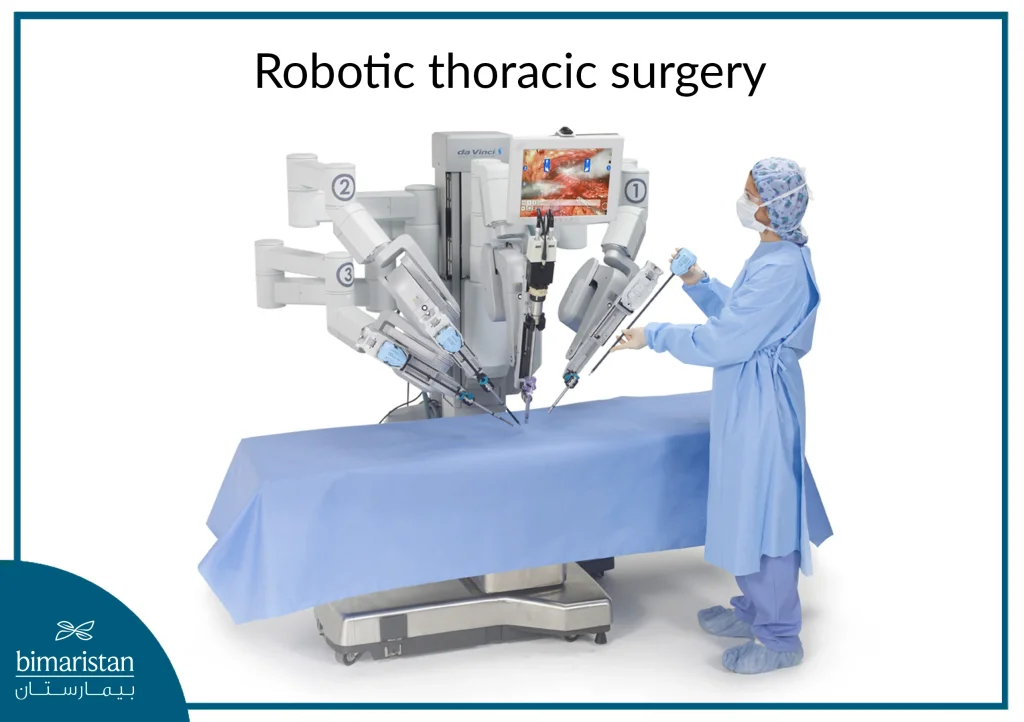
Robotic surgery for lung cancer is a modern technique based on advanced robotic systems, such as the da Vinci system. In this procedure, the surgeon controls precise robotic arms via a command module that provides high-definition 3D vision and greater flexibility than the human hand. This technique is primarily used to remove affected lung lobes or segments while preserving as much healthy tissue as possible.
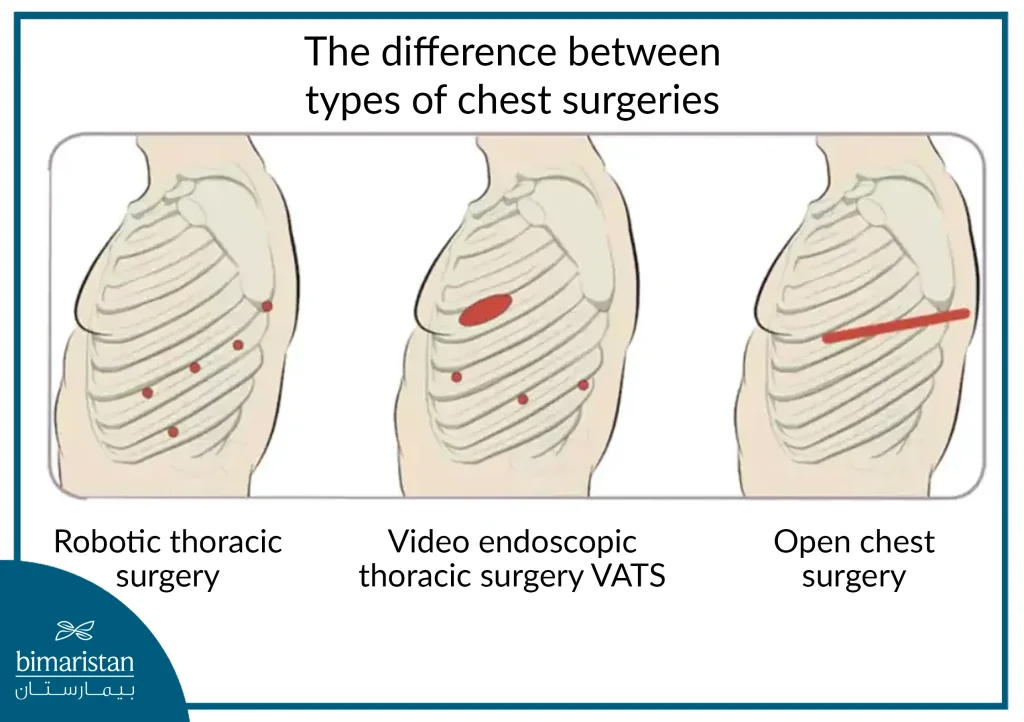
It is characterized by smaller incisions, less blood loss, less postoperative pain, faster recovery, and a lower complication rate than open surgery or conventional thoracoscopy. This procedure combines surgical precision and patient comfort, with promising clinical results in disease control and improved quality of life.
Preparations before robotic lobectomy
Performing robotic lobectomy usually involves the following steps:
- Comprehensive medical evaluation: Through clinical examination and radiography.
- Pulmonary and cardiac function tests: To assess the patient’s ability to tolerate anesthesia and surgery.
- Accurate tumor staging: By assessing the size of the tumor and its spread to lymph nodes or other organs.
- Management of chronic health conditions: Diabetes, hypertension, and heart disease prior to the procedure.
- Smoking cessation before surgery: Weeks before surgery to improve breathing efficiency and minimize complications.
- Psychological and informational preparation: Explain the procedure to the patient in detail and outline the benefits and risks.
- Preoperative dietary instructions: Patients should fast from food and drink for several hours before surgery, as directed by their doctor.
- Logistical and surgical team coordination: Arranging hospitalization, surgical team, and robot tools.
- General anesthesia planning: Establishing an anesthesia plan utilizing a double-lumen endotracheal tube to allow single-lung ventilation and collapse of the affected lung during surgery.
What are the steps of robotic lobectomy for lung cancer?
During robotic lobectomy, the surgeon sits at the console and makes small incisions through which the procedure is performed. A camera and miniaturized surgical instruments are then inserted into the area of the lung cancer. The console provides a 360‑degree view of the surgical field. The surgeon holds the control handles and performs small hand movements, which the system translates into fine, precise movements of the surgical instruments inside the lungs. Finally, the surgeon removes the lung tissue through one of the incisions along with the surgical instruments.
Patient care after robotic lobectomy for lung cancer
The patient receives care following a robotic lobectomy for lung cancer, explained as follows:
- Direct observation in the resuscitation room: Continuous monitoring of vital signs (blood pressure, pulse, oxygen).
- Pain control: Give appropriate analgesics to reduce pain and encourage the patient to move and breathe deeply.
- Chest tube management: Monitor air and fluid drainage from the chest cavity, and remove the chest tube when drainage ceases.
- Prevention of respiratory complications: Encourage the patient to practice deep-breathing exercises and to use an Incentive Spirometer.
- Early mobilization: Assist the patient in gradually sitting and walking to reduce the risk of thromboembolism and improve pulmonary function.
- Nutritional follow-up: Begin with liquids, then progress to solid foods according to the patient’s ability to swallow and digest.
- Care of surgical incisions: Clean and monitor wounds to prevent infections, and change bandages regularly.
- Laboratory and imaging follow-up: Blood tests and X-rays to make sure the lungs are healthy and there are no complications.
- Scheduled medical review: Schedule follow-up appointments with the medical team to review the histologic analysis results and assess the need for additional treatment (e.g., chemotherapy or radiation).
Types of robotic lobectomy
Surgeons may use robotic technology for three types of lung cancer surgery. These include:
- Pulmonary lobectomy: This term refers to the removal of the entire affected lobe.
- Wedge resection: Removing a small wedge-shaped portion of the lung containing the tumor, while preserving as much healthy tissue as possible
- Partial resection: In this procedure, the surgeon removes more tissue than in a wedge resection but less than in a lobectomy.
Research comparing the outcomes of people with non-small cell lung cancer after the three types of surgery has found a link between lobectomy and higher survival rates.
Advantages of robotic lobectomy for lung cancer
Because robot-assisted surgery is minimally invasive, it has many benefits. These include:
- Shorter hospital stays
- Faster return to normal life
- less pain
- Fewer complications
- Less blood loss
- smaller scars
- No cutting of the sternum or ribs
However, the body’s response to robot-assisted surgery varies from person to person. A person’s response depends on several factors, such as their medical history and the type of lung cancer.
Research has shown that the complication rate is significantly reduced in robotic surgery for lung cancer compared to conventional surgery.
Complications of robotic lobectomy for lung cancer
All surgeries, even the simplest lung cancer surgery, have risks, such as:
- Air leaks from the lungs
- Bleeding
- Inflammation
- pain
- Irregular heartbeat
The cost of robotic lobectomy for lung cancer in Turkey
The cost of robotic lobectomy is approximately 3,500-11,500 USD, which is slightly lower than in the United States and European countries, where costs can reach up to 25,000 USD.
| State | Cost |
|---|---|
| Turkey | 3,500 – $11,500 |
| United States of America | 12,000 – $20,000 |
| Britain | 10,000 – $13,000 |
| France | 12,000 – $15,000 |
| Germany | 20,000 – $25,000 |
In conclusion, robotic lobectomy in Turkey is one of the most effective therapeutic options for selected lung cancer cases, offering patients superior treatment with fewer complications and at a more affordable cost compared to many other countries.
Sources:
- Cerfolio, R. J., & Bryant, A. S. (2018). Robotic-assisted pulmonary resection for lung cancer: Long-term oncologic results. Annals of Thoracic Surgery, 105(2), 421-427.
- Siteman Cancer Center. (n.d.). Robotic-assisted lobectomy for lung cancer. Washington University School of Medicine. Retrieved January 28, 2026,