
Gynecologic cancers are cancers that affect the female reproductive system and pose a real threat to women’s health. Their symptoms and causes vary, but gynecologic cancers all increase in prevalence with age, and early detection, periodic examination, and awareness are essential factors in prevention and treatment, making awareness of these cancers a necessary step for a healthy and safe life.
What are gynecologic cancers?
Gynecologic cancers are types of cancer that originate in the female reproductive system and include any abnormal growth of cells in the internal reproductive organs of women. What distinguishes gynecologic cancers from others is their direct link to reproductive and hormonal functions and their sensitivity to factors such as pregnancy, the menstrual cycle, and female hormones.
Gynecologic cancers are classified as a special category due to their uniqueness in terms of biological causes, the specificity of symptoms, and the nature of diagnosis and treatment. They also have physical, psychological, and social consequences that affect sensitive aspects of a woman’s life, which makes dealing with them require a careful understanding and comprehensive consideration of physical, reproductive, and psychological health aspects.
The most common types of gynecologic cancers
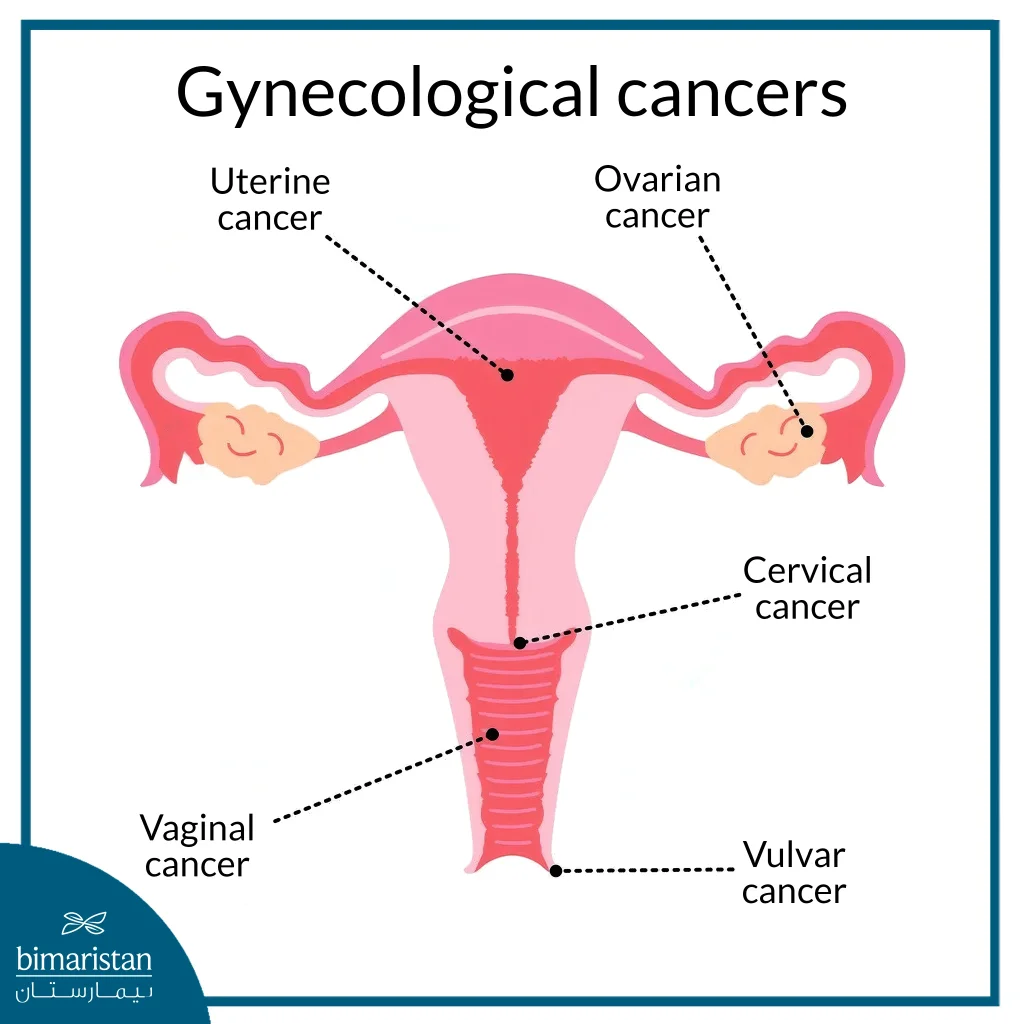
There are different types of gynecologic cancers:
- Uterine cancer: The most common of these cancers is endometrial cancer, which begins in the inner layer lining the uterus. There are other less common types known as uterine sarcomas, which originate in the muscles or connective tissue of the uterus, the most prominent of which is leiomyosarcoma, which is the most common type of uterine sarcoma, the most aggressive and the most difficult to diagnose and treat.
- Ovarian cancer: The second most common of all gynecologic cancers, with approximately 20,000 cases diagnosed each year in the U.S. It develops when abnormal cells grow in or on the surface of the ovary.
- Cervical cancer: Caused by changes in the cells of the cervix, it is associated in more than 99% of cases with human papillomavirus (HPV) infection.
- Vulvar cancer: A rare cancer that affects a woman’s external genitalia, such as the labia and clitoris.
- Vaginal cancer: One of the rarest gynecologic cancers, it begins in the inner tissues of the vagina and is more common in older women.
Causes and risk factors for gynecologic cancers
The exact causes of most gynecologic cancers are still not fully understood, but a number of factors may increase the risk of developing them:
- Human papillomavirus (HPV) infection: This is a major factor in cervical cancer and is also associated with some vaginal and vulvar cancers.
- Genetic factors and family history: Having previous cases of ovarian or uterine cancer in the family, especially in first-degree relatives, may increase the likelihood of developing ovarian or uterine cancer.
- Hormonal disorders: Overexposure to the hormone estrogen, whether from natural causes or post-menopausal hormone therapy, is associated with an increased risk of uterine cancer.
- Obesity: It is associated with an increased risk of some gynecological cancers, especially endometrial cancer, due to its effect on hormone levels in the body.
- Age and lifestyle: Aging, smoking, weakened immunity, chronic diseases such as diabetes, early onset of menstruation or late menopause increase the risk, as does previous exposure to radiation, taking birth control pills or fertility medications, and a high-fat diet.
What are the symptoms of gynecologic cancers?
Symptoms of gynecologic cancers vary depending on the type and stage of cancer, and some of them may be hidden or similar to non-cancerous conditions, which delays diagnosis. It is important to pay attention to the early signs and consult a doctor when you notice any unusual changes.
Cervical cancer symptoms
There are usually no symptoms in the early stages, but as the disease progresses there may be abnormal vaginal bleeding (between cycles, after intercourse, or after menopause), recurrent or unexplained pelvic or back pain, pain during intercourse, or vaginal discharge that is abnormal in amount or odor.
Ovarian cancer symptoms
It is difficult to detect early because the symptoms are not obvious, and symptoms include Feeling bloated and full quickly when eating, changes in urination or bowel movements (such as frequent urination, sudden urgency, or constipation), unusual vaginal bleeding or discharge after menopause, pelvic or abdominal pain as well as unexplained fatigue, and unexplained weight loss.
Uterine cancer symptoms
Abnormal vaginal bleeding is the most common sign, especially in post-menopausal women. This may include light or heavy bleeding, frequent bleeding between periods, unusual vaginal discharge, or pelvic pain.
Symptoms that women may neglect
Persistent fatigue, digestive or appetite disturbances, bloating, back or pelvic pain; these symptoms are often interpreted as normal or temporary, leading to delays in diagnosis and treatment.
Gynecologic cancers diagnosis
Diagnosis of gynecologic cancers begins with taking a medical history and performing a pelvic examination. The Pap test is used for early detection of abnormal cells in the cervix, and if suspected, additional tests such as ultrasound, magnetic resonance imaging (MRI), or computed tomography (CT) scans are performed to determine the location and spread of the tumor.
A biopsy is the definitive diagnostic tool, in which a sample of the suspicious tissue is taken and examined in the laboratory. Blood tests may also be used to measure tumor markers such as CA-125 in cases of ovarian cancer.
Gynecologic cancer treatment
The treatment of gynecologic cancers varies according to the type and stage of the cancer, often the treatment plan includes a combination of surgery, chemotherapy or radiation, where surgery is used to remove the tumor or affected organs, while chemotherapy is used to kill cancer cells, and radiation therapy is used to destroy cancer cells in the affected areas without significantly affecting the surrounding healthy tissues.
In some cases, hormone therapy is used, especially in hormone-dependent cancers, or targeted immunotherapy that targets tumor cells with higher precision, and the treatment plan is determined in cooperation between the doctor and the patient, taking into account the state of health and the desire to preserve fertility in younger women.
Preventing gynecologic cancers
Prevention is an essential step in minimizing the risk of gynecologic cancers, especially in light of the limited means of early detection for some of them:
- HPV vaccine: The HPV vaccine helps prevent cervical, vaginal, and vulvar cancers, and is recommended for females and males between the ages of 9 and 26, and can be given up to age 45 in some cases. The vaccine is most effective before exposure to the virus.
- Regular screening: Pap test and HPV testing are effective tools for detecting early changes in the cervix. It is recommended to start screening at age 21 and repeat it every 3 to 5 years, depending on age and health status.
- Family history and genetic testing: It is advisable to review family history with the doctor, especially if there are previous cases of ovarian, breast, or colon cancer, and genetic testing may be recommended for some women to determine genetic susceptibility.
- Healthy lifestyle and hormone regulation: Regular physical activity, avoiding smoking, and maintaining a healthy weight reduce the risk of endometrial cancer, especially endometrial cancer associated with obesity and hormone disruption, and regulating hormonal balance, especially in post-menopause or while using hormone therapy, is an important factor in preventing some gynecologic cancers.
Supporting women through the cancer journey
Psychosocial support is an essential element in the treatment journey, the patient needs someone who listens to her without judgment, sharing ordinary moments and not just talking about the disease, nutritional and psychological stability helps tolerate treatment and improves quality of life, in addition to constant communication with the medical team and understanding her changing needs makes a big difference, research has shown that women who receive regular psychological support feel a higher quality of life and complete their treatment more successfully.
In conclusion, gynecologic cancers are a health challenge that can be mitigated with awareness, early detection, and a balanced lifestyle, and the earlier the diagnosis of gynecologic cancers, the more effective the treatment and the better the chances of recovery.
Sources:
- Centers for Disease Control and Prevention. (n.d.). Gynecologic cancers. U.S. Department of Health and Human Services.
- Tran, C., Diaz-Ayllon, H., Abulez, D., Chinta, S., Williams-Brown, M. Y., & Desravines, N. (2025). Gynecologic cancer screening and prevention: State of the science and practice. Current Treatment Options in Oncology.