
Nerve inflammation is a frequent condition affecting the peripheral nervous system and can impact millions worldwide. Estimates suggest that peripheral nerve disorders occur in roughly 2–3% of the general population, increasing to over 8% in adults older than 55. This inflammation develops when nerve fibers become irritated or damaged, leading to uncomfortable symptoms that may persist over time. The pattern and intensity of these symptoms vary depending on the underlying cause and the specific nerves involved.
What is nerve inflammation?
Nerve inflammation is a condition that affects nerves by irritating or damaging them, disrupting their normal function in transmitting nerve signals between the brain and the rest of the body. The inflammation may affect one or several nerves at the same time, and often affects the peripheral nerves responsible for sensation and movement.
Nerve inflammation occurs when nerve fibers are damaged directly or indirectly, whether due to inflammation, malnutrition, constant pressure, or metabolic disorders, and as a result, symptoms such as nerve pain, numbness, tingling, or muscle weakness may appear. The severity of these symptoms varies according to the type of nerve affected and the extent of inflammation.
Nerve inflammation is not a single disease but rather a description of a neurological condition that may result from multiple causes, making an accurate diagnosis of the underlying cause a crucial step in choosing the right treatment and improving the chances of recovery.
How does nerve inflammation occur?
Nerve inflammation occurs when damage to nerve fibers disrupts their structure or their ability to transmit electrical signals normally. This often begins with an inflammatory process in the nerve sheath or axon, which disrupts communication between the brain or spinal cord and the rest of the body. As inflammation continues, nerve signals become erratic or painful, leading to symptoms such as tingling, pain, or muscle weakness.
There are several mechanisms leading to this inflammation. It may be caused by immune disorders that mistakenly attack the nerves, ischemia, or metabolic effects that lead to progressive damage to the nerve fibers. Chronic pressure on the nerve or lack of nutrients necessary for its function contribute to the acceleration of nerve damage, which explains why the severity of symptoms and the speed of progression vary from case to case.
Causes of nerve inflammation
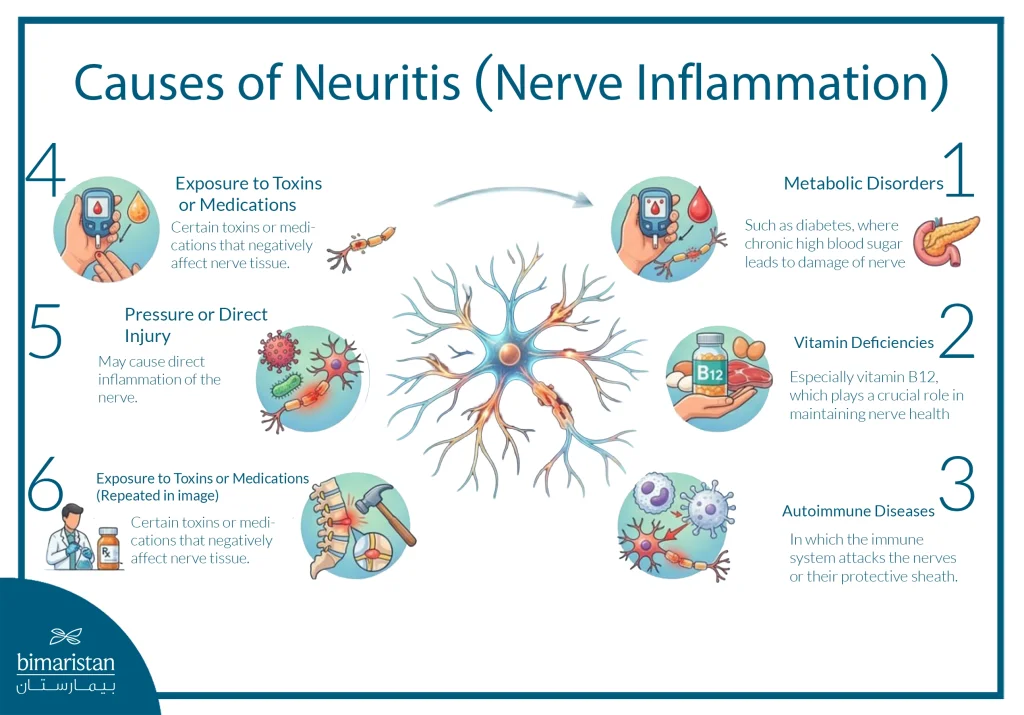
Depending on the mechanism of injury and the type of nerve affected, nerve inflammation can be localized or generalized, affecting multiple nerves at the same time. Understanding the underlying cause is key to choosing the right treatment and preventing symptom progression. Causes of nerve inflammation include the following:
- Metabolic disorders such as diabetes, where chronic high sugar leads to damage to nerve fibers.
- Vitamin deficiencies, especially vitamin B12, which plays an essential role in nerve health and function.
- Immune diseases in which the immune system attacks the nerves or their protective sheath.
- A viral or bacterial infection that may cause direct nerve inflammation.
- Pressure or direct injury to the nerve as a result of a herniated disc or trauma.
- Exposure to toxins or certain medications that negatively affect the nerve tissue.
Symptoms of nerve inflammation
Symptoms of nerve inflammation vary depending on the type of nerve affected and the degree of inflammation, and may appear gradually or suddenly, increasing in severity as the nerve damage progresses. Symptoms often affect sensation, movement, or both. Symptoms of nerve inflammation include:
- Sensory symptoms such as burning neuralgia, numbness, tingling, or a feeling of cold or electricity.
- Motor symptoms include muscle weakness, difficulty moving the affected limb, or loss of muscle coordination.
- Autonomic symptoms such as sweating disorder, changes in blood pressure, or digestive issues, in some cases.
- Symptoms increase at night or at rest, a common pattern in many cases of peripheral nerve inflammation.
Types of nerve inflammation
Nerve inflammation is categorized by the number of affected nerves and their location in the nervous system, and this classification helps understand expected symptoms and determine the most appropriate treatment plan for each case.
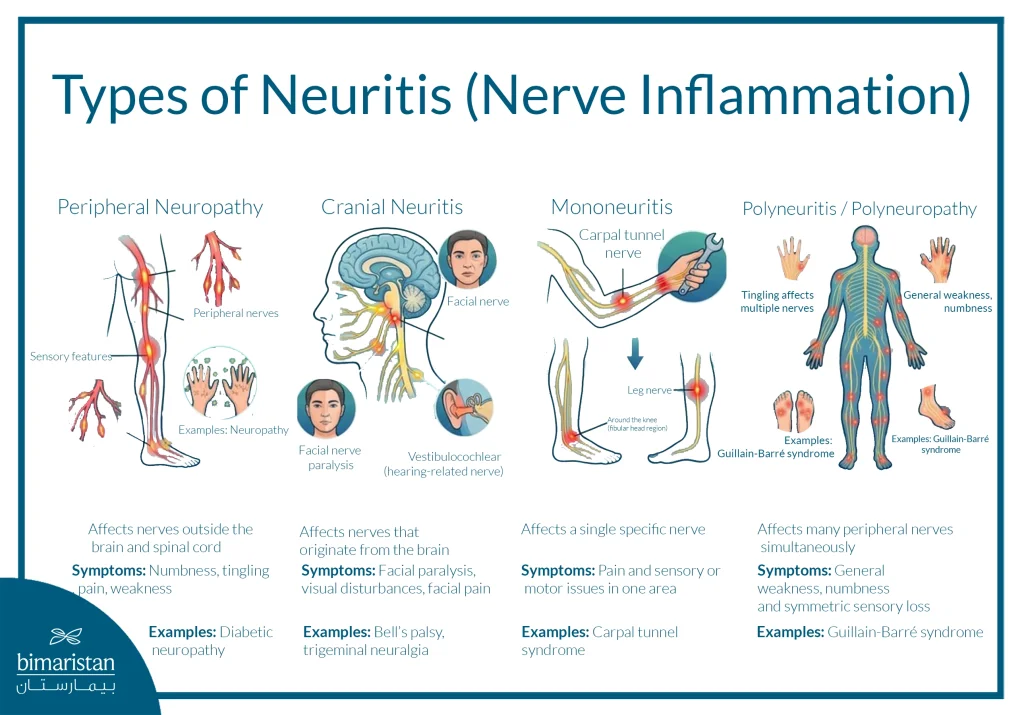
Types of nerve inflammation include:
- Peripheral nerve inflammation: The most common type, affecting the nerves responsible for sensation and movement in the limbs, often presenting as pain and numbness in the hands or feet.
- Cranial nerve inflammation: Affects nerves exiting the brain, such as the facial or optic nerve, and may cause facial muscle weakness or vision disturbance.
- Mononeuritis: Limited to a single nerve as a result of compression or localized injury.
- Polyneuritis: It affects a group of nerves simultaneously and is often associated with systemic diseases such as diabetes or immune disorders.
When is nerve inflammation a serious sign?
Nerve inflammation is a serious sign when symptoms are unusual or develop rapidly, which may indicate a serious neurological or systemic cause that needs urgent medical evaluation. It is particularly dangerous when symptoms are accompanied by a rapid deterioration in motor or sensory function. Conditions of concern include:
- Sudden or worsening muscle weakness that may interfere with movement or walking
- Rapid or asymmetric loss of sensation on both sides of the body
- Symptoms accompanied by weight loss, fever, or severe pain that persists for no apparent reason
- Disruption of autonomic nerve functions, such as difficulty breathing, arrhythmia, or low blood pressure
- Symptoms do not improve or worsen despite treatment, suggesting a more serious immunologic or neurologic disease
How is nerve inflammation diagnosed?
Nerve inflammation is diagnosed through a thorough medical evaluation to determine the affected nerve and the underlying cause. Diagnosis begins with a detailed history that includes the nature, duration, and aggravating or relieving factors of the symptoms, followed by a neurological clinical examination that assesses sensation, muscle strength, and nerve reflexes.
The diagnosis is completed with additional tests depending on the case, such as Electromyography (EMG) to assess the speed and efficiency of nerve signal transmission, as well as laboratory tests to detect metabolic disorders or vitamin deficiencies. In some cases, medical imaging such as magnetic resonance imaging (MRI) is used to assess nerve compression or structural injury, which helps guide the treatment plan accurately.
Nerve inflammation treatment methods
The treatment for nerve inflammation primarily depends on identifying its cause, as there is no universal treatment plan. Treatment aims to relieve nerve pain, improve nerve function, and prevent the development of long-term nerve damage, using a combination of pharmacological and supportive therapies depending on symptom severity and injury type.
Treating the underlying cause
Addressing the root cause is the most important step in this process, such as adjusting blood sugar levels in diabetics, replacing vitamin deficiencies, or treating the infection causing the inflammation. This stops the progression of nerve damage and improves response to other treatments.
Drug therapy for neuropathic pain
Neuropathic pain relief medications are specialized drugs that differ from conventional painkillers. They are designed to reduce the overactivity of the affected nerves. The selection of these medications depends on the severity of the pain and the patient’s overall health status.
Physical therapy and rehabilitation
Physical therapy helps to improve muscle strength, maintain joint flexibility, reduce stiffness, and improve balance. It is an important part of the treatment plan, especially in chronic conditions or those associated with motor impairment.
Supportive therapies and advanced interventions
In some cases, supportive methods such as lifestyle modification, nutritional optimization, or advanced medical techniques may be used when conventional treatments fail. This option is determined after careful evaluation of the case and the degree of response to conservative treatment.
Can nerve inflammationbe cured?
Nerve inflammation can be cured in many cases, especially when the underlying cause is diagnosed and treated early. In cases caused by vitamin deficiencies, transient infections, or temporary pressure on the nerve, nerve function may gradually improve, and most symptoms will disappear with proper treatment.
On the other hand, it can become chronic when caused by long-term illnesses such as diabetes or certain immune disorders, where treatment focuses on controlling symptoms and preventing nerve damage from worsening. The chances of improvement depend largely on the severity of the injury, the duration of symptoms before treatment, and adherence to the recommended treatment plan.
Preventing nerve inflammation
In many cases, nerve inflammation can be prevented by controlling predisposing factors and minimizing exposure to nerve-damaging factors. This includes controlling chronic diseases such as diabetes and adhering to a healthy lifestyle that includes a balanced diet rich in essential B-group vitamins for nerve function.
Prevention includes avoiding repetitive stress on the nerves, avoiding toxins and certain medications that may affect nerve tissue, and early detection of any abnormal neurological symptoms. Early diagnosis and treatment can help prevent the progression of inflammation and minimize the risk of long-term neurological complications.
Nerve inflammation is a condition that can significantly affect daily functioning when it goes unrecognized or unmanaged. Early evaluation and identifying the underlying trigger can help reduce symptoms and limit the risk of ongoing nerve irritation. Follow‑up at centers experienced in neurological conditions and able to provide accurate assessments is valuable for long‑term management. Bimaristan Medical Center offers this type of coordinated care, using advanced diagnostic tools and individualized treatment approaches for each case.
Sources: