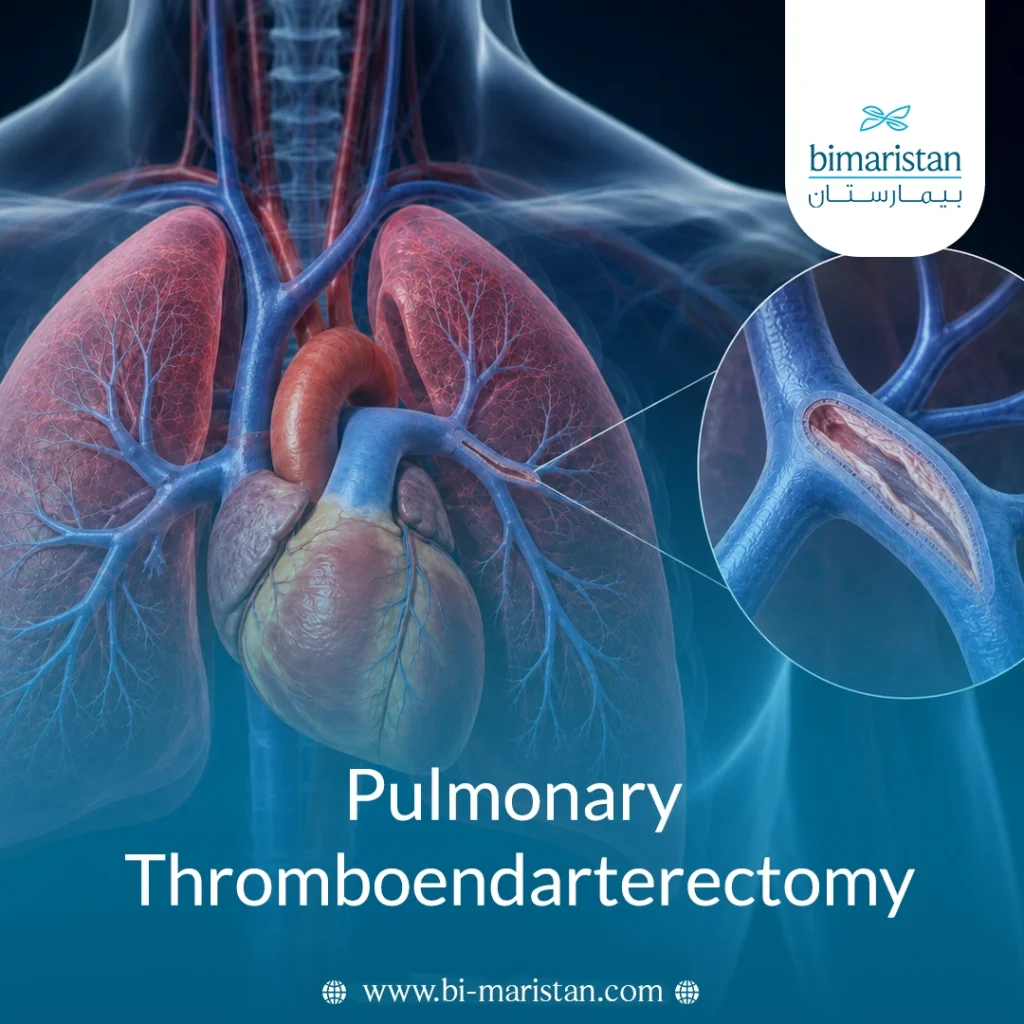
Pulmonary vascular diseases affect blood flow between the heart and the lungs, and some chronic conditions may increase the burden on the pulmonary circulation and cause symptoms that vary in severity depending on the extent of the obstruction and its impact on heart and lung function.
In some cases, surgical intervention may be necessary to restore blood flow, and Pulmonary Thromboendarterectomy (PTE) is one specialized procedure used for this purpose. The procedure’s suitability and outcomes depend on a careful assessment of the patient’s condition and the nature of the changes in the pulmonary arteries.
What is Pulmonary Thromboendarterectomy (PTE)?
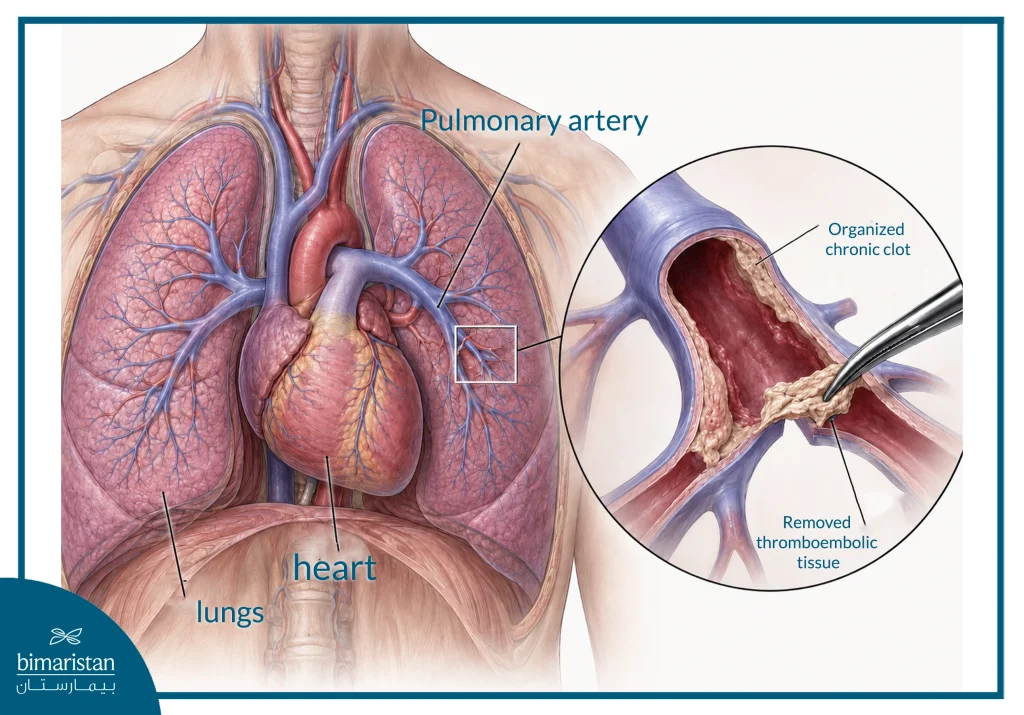
Pulmonary Thromboendarterectomy (PTE) is a complex surgical procedure that removes chronic blood clots blocking the pulmonary arteries, the vessels that carry blood from the heart to the lungs. The procedure is also known as Pulmonary Endarterectomy (PEA).
Chronic blood clots differ from recent clots because, over time, they develop into scar-like tissue that adheres to the artery walls. Medication alone cannot eliminate this tissue. Removing these chronic clots helps restore blood flow to the lungs, reduces strain on the right side of the heart, and improves blood and oxygen delivery to the lungs.
When is pulmonary thromboendarterectomy performed, and who is a candidate for the procedure?
Pulmonary thromboendarterectomy is primarily performed in patients with Chronic Thromboembolic Pulmonary Hypertension (CTEPH), a condition in which old blood clots remain lodged in the walls of the pulmonary arteries, obstructing blood flow. Over time, these clots may turn into scar tissue, raising pressure inside the pulmonary vessels and increasing the workload on the right side of the heart, especially when they do not respond to medication.
A patient’s suitability for the procedure is determined after evaluating a number of factors, the most important of which are:
- Severity of the disease and symptoms
- Location, degree, and extent of the obstruction within the pulmonary arteries
- Presence of pulmonary hypertension resulting from chronic thromboembolic disease
- Patient’s age and general health status
- Efficiency of heart and lung function
- Surgical accessibility of the clots and their location within the branches of the pulmonary arteries
- Expertise of the surgical team, particularly regarding distal obstructions or patients with a history of thoracic surgery
Patients with moderate-to-severe symptoms and surgically accessible blockages are the primary candidates for the procedure, although some patients with milder symptoms may also be evaluated on a case-by-case basis.
How is a patient evaluated before pulmonary thromboendarterectomy?
Pulmonary thromboendarterectomy requires a thorough preoperative evaluation to determine disease anatomy, the location of occlusions, and to plan the procedure appropriately. The medical team carefully reviews cardiac and vascular tests and radiographic images, paying particular attention to right ventricular function and the patient’s hemodynamic status.
Preoperative tests may include:
- Computed Tomography (CT)
- Echocardiogram (Echo)
- Angiography
- Blood Tests
- Chest X-ray
- Magnetic Resonance Imaging (MRI)
Preparing for pulmonary thromboendarterectomy
Before the procedure, the medical team explains the details to the patient and their family, and the patient signs a consent form after discussing the procedure and answering questions. The doctor also provides specific instructions regarding medications, food, drinks, and habits that may affect the surgery and recovery. Preparation instructions typically include:
- Medications: You may be asked to stop taking certain blood thinners, such as aspirin or warfarin, and certain nonsteroidal anti-inflammatory drugs (NSAIDs) due to an increased risk of bleeding.
- Food and drink: You may be asked to fast before the procedure to ensure anesthesia safety.
- Smoking and alcohol: It is recommended that you quit smoking and reduce your alcohol intake, as these can slow recovery and increase the risk of complications.
The medical team also performs additional preparations at the start of the procedure, such as placing arterial lines and a pulmonary artery catheter and monitoring body temperature, while using transesophageal echocardiography and other necessary intraoperative monitoring methods.
How is a pulmonary thromboendarterectomy performed?
Pulmonary endarterectomy is performed under general anesthesia and typically takes about six hours. The procedure involves the use of a heart-lung machine and temporary hypothermia, enabling the surgeon to access the pulmonary arteries and precisely remove chronic obstructions.
The process is typically carried out according to the following steps:
- Anesthesia and mechanical ventilation: The patient is placed under general anesthesia, and an endotracheal tube is inserted and connected to a ventilator for the duration of the surgery.
- Accessing the heart and lungs: Surgeons make a chest incision and open the sternum to access the heart and pulmonary arteries.
- Use of a heart-lung machine: The patient is connected to a heart-lung machine, which temporarily pumps blood and oxygenates it during surgery.
- Lowering body temperature: Body temperature is gradually lowered to approximately 18°C to protect the organs during periods when blood flow is temporarily halted.
- Removing blockages: The surgeon opens the pulmonary arteries and begins removing chronic clots, along with any scar tissue adhering to the arterial walls.
- Restoring circulation and rewarming: Once clot removal is complete, blood circulation is restored, and the patient’s body is gradually rewarmed to its normal temperature.
- Concluding the procedure and closing the chest: The patient is disconnected from the heart-lung machine once their condition stabilizes; the chest is then closed, and drainage tubes are inserted to remove excess fluid, while the patient remains on the ventilator during the immediate postoperative period.
What happens after pulmonary thromboendarterectomy?
Once the pulmonary thromboendarterectomy is completed, the patient is transferred to the intensive care unit for monitoring of their heart and lungs, and they are often still on a ventilator. Medical staff assess the patient’s breathing after surgery and remove the breathing tube when the patient can breathe independently. This can occur the next day or may take several days, depending on the patient’s condition. Chest drainage tubes are kept in place for a few days, and the patient begins to get up and walk gradually as their condition stabilizes.
Once the patient’s condition has stabilized, they are transferred from the intensive care unit to a regular hospital room, where tests evaluate heart and lung function and determine the need for oxygen after discharge. The length of the hospital stay varies depending on the speed of recovery and can range from 7–10 days to two weeks or more in some cases.
Recovery after pulmonary thromboendarterectomy
Recovery continues gradually after discharge, and it may take several months for the patient to return to their normal routine. The most important aspects of recovery include:
- Gradually increasing physical activity and encouraging walking during the recovery period
- Avoiding driving, work, and strenuous activities during the initial weeks, in accordance with medical instructions
- Possible temporary need for supplemental oxygen for several months while the lungs recover
- Resumption of normal activities for most patients within approximately three months
- Follow-up visits and examinations, typically scheduled after 6 weeks and again after 3–6 months
- Lifelong use of blood thinners to prevent the formation of new clots
- Continued improvement in breathing and physical activity capacity for a long period after surgery
Results and benefits of pulmonary thromboendarterectomy
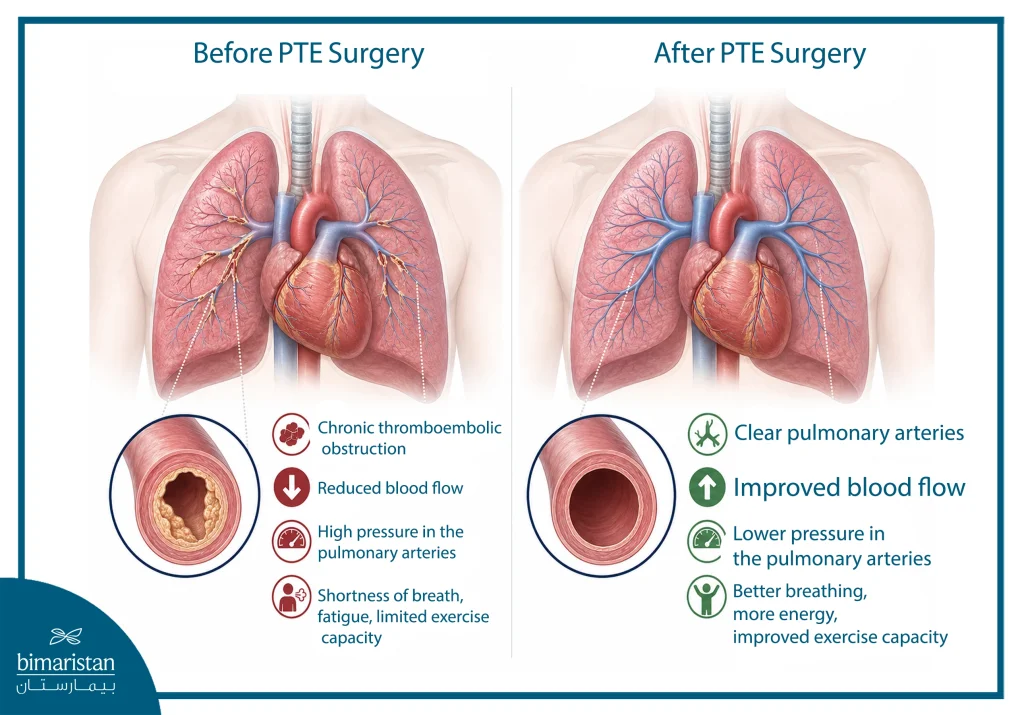
Pulmonary thromboendarterectomy is the only treatment capable of curing Chronic Thromboembolic Pulmonary Hypertension (CTEPH) in patients who are candidates for surgery. Removing chronic blockages helps improve blood flow through the pulmonary arteries and reduces the burden on the right side of the heart. The key benefits and outcomes of the procedure include:
- Improved breathing, lung function, and exercise capacity
- Reduced need for supplemental oxygen among many patients who required it prior to surgery
- Improved function of the right side of the heart, with potential reversal of changes caused by the increased workload
- Improved exercise tolerance and physical activity levels, with significant improvement observed in the initial months following surgery
- Favorable long-term outcomes and high post-surgical survival rates, particularly when the procedure is performed at experienced centers
Risks and complications of pulmonary thromboendarterectomy
Pulmonary thromboendarterectomy is a major surgery and, as such, may be associated with complications during or after the procedure; the degree of risk varies with disease severity and the patient’s overall health. The most notable potential complications include:
- Reperfusion lung injury: This may occur after blood flow is restored to areas of the lung that had suffered from chronic obstruction and may be associated with pulmonary edema.
- Persistent pulmonary hypertension: This may remain in some patients after surgery and require additional treatment.
- Bleeding: This may occur during or after surgery and, in some cases, may necessitate further intervention.
- Cardiac arrhythmias: These may appear postoperatively; in many cases, they are temporary and treatable.
- Infection: This may affect the surgical incision site after the operation.
- Neurological complications: Such as stroke or intracranial hemorrhage; these are less common.
- Need for temporary cardiopulmonary support: Some severe cases may require the use of extracorporeal membrane oxygenation (ECMO).
The surgical team assesses these risks before the procedure and weighs them against the expected benefits on a case-by-case basis.
In conclusion, pulmonary thromboendarterectomy is a specialized surgical treatment for patients with chronic thromboembolic pulmonary hypertension who are suitable candidates for the procedure; it aims to remove chronic clots obstructing blood flow in the pulmonary arteries and alleviate strain on the heart and lungs. A successful operation can significantly improve breathing, physical activity, and quality of life, while meticulous preoperative assessment, appropriate patient selection, and regular follow-up help achieve the best possible outcomes and minimize the risk of long-term complications.
Sources: