
The larynx is an essential organ for voice, breathing and swallowing, but diseases that affect it, such as cancer and respiratory disorders, can significantly affect the quality of life, and with the development of medical techniques, surgical intervention has become a necessary option in some cases, especially when the condition requires removing the affected tissue or repairing the damage to ensure the vital functions of the larynx.
Over the past years, research has made significant progress in understanding the anatomical and acoustic properties of the larynx, not only through human studies but also through the use of animal models that provide new insights into the mechanisms of voice and the impact of surgery on it. This development supports surgeries that aim to preserve patients’ ability to breathe and communicate despite the challenges associated with these procedures.
What is laryngeal surgery?
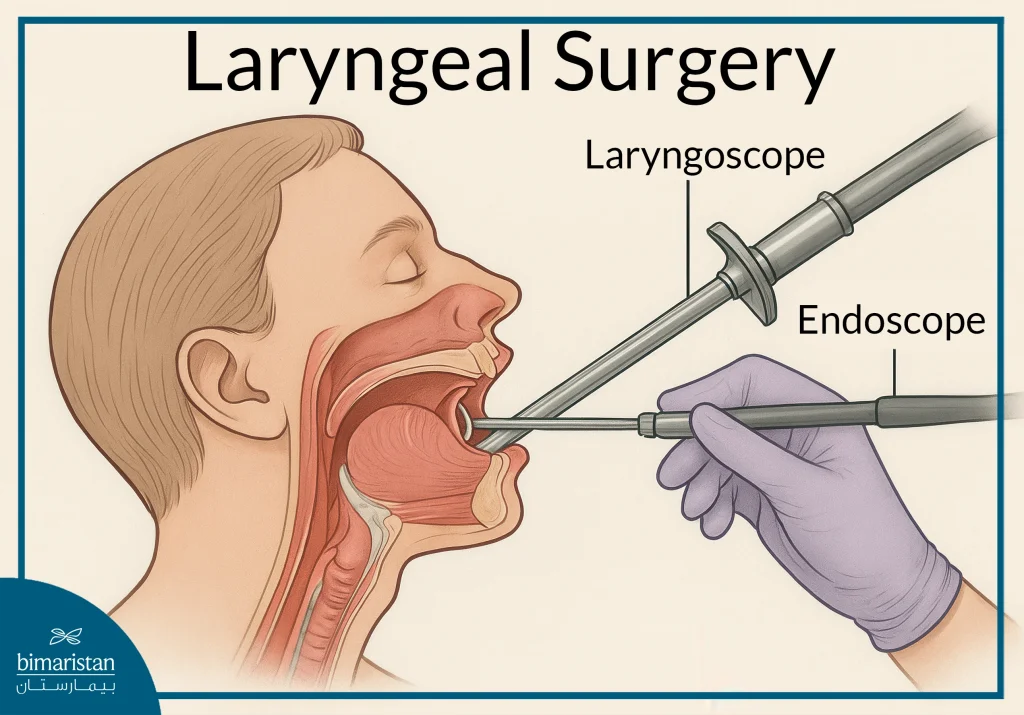
Laryngeal surgery: It can include removing part of the larynx or correcting structural issues with the aim of improving respiratory and voice function or treating diseases such as laryngeal cancer. Surgery techniques vary depending on the patient’s condition, as it can be performed under general anesthesia through the mouth or through an external incision in the neck. Some interventions can also be performed using lasers or precise surgical instruments to preserve laryngeal function as much as possible in more complex cases, such as advanced tumors, it may be necessary to remove the larynx completely.
When is laryngeal surgery recommended?
- Fracture of the larynx: A serious injury that affects breathing or voice, requiring surgical intervention.
- Laryngealcancer: When there is a tumor that affects the functions of the larynx and requires partial or complete removal.
- Severe damage to the larynx due to injuries or trauma that interferes with the ability to speak or breathe.
- Chondronecrosis of the laryngeal cartilage: A rare condition caused by radiation therapy, resulting in permanent damage to the larynx.
- Laryngeal dysfunction: When the larynx does not function properly, preventing the patient from speaking or eating without the risk of food entering the lungs (pulmonary aspiration).
- Tumors or benign lesions in the upper respiratory tract such as polyps, nodules, and cysts that may affect voice or breathing.
- Subglottic stenosis: A narrowing of the airway below the vocal cords that may be misdiagnosed as asthma or bronchitis.
- Neurological disorders that affect the muscles of the larynx, such as spasmodic dysphonia, resulting in vocal disturbances that may be misdiagnosed as stuttering.
- Chronic swallowing issues that interfere with normal eating, where laser intervention can help in some cases without the need for traditional surgery.
Types of laryngeal surgery
| Type of surgery | Description | Features | Disadvantages |
|---|---|---|---|
| Acoustic Laser Surgery | Laser treatment of tumors and lumps on the vocal cords, performed under general anesthesia. | Minimally invasive – short recovery time, often same-day return | Limited in complex cases, may require multiple sessions – higher cost |
| Laryngeal frame surgery | Cartilage modification to improve vocal cord function to treat paralysis or stenosis. | Very effective (about 90%), can be performed under local anesthesia, significant improvement in voice | May require additional adjustments, requiring surgical expertise |
| Vocal cord injection | Injections of temporary substances to treat paralysis or muscle weakness, performed in the clinic. | Simple and quick procedure, non-invasive, temporary allowing for monitoring | Temporary results, may need to be repeated, not suitable for permanent conditions |
| Vocal cord implants | Implanting permanent or semi-permanent materials within the vocal cords to improve the voice in cases of paralysis or atrophy. | Relatively permanent enhancement, a long-term alternative to injections, improves sound quality | Surgical procedure, risk of implant movement or complications, needs careful evaluation before the procedure |
| Laparoscopic surgery | The use of an endoscope to perform operations inside the larynx without opening the neck, used for multiple purposes including removing tumors or evaluating the condition. | Minimally invasive, no incision required, high accuracy in diagnosis and treatment | Sometimes limited visibility, requires special equipment, may not be suitable for all cases |
| Partial laryngectomy | Removing part of the larynx to treat early cancer, while preserving the ability to speak and eat. | Preserves laryngeal function, less invasive than complete resection | Limited in early cases, the likelihood of cancer recurrence |
| Total laryngectomy | Removing the entire larynx for advanced cancer, separating the airway from the digestive tract. | An effective treatment for advanced cancer that prevents the disease from spreading | Loss of normal speech, requiring breathing and speech adjustments, significant psychological impact |
How to prepare for laryngeal surgery?
Before a laryngectomy, doctors will perform a complete physical examination and recommend tests, which may include:
- Complete blood count or other routine blood tests.
- A chest X-ray to scan you for surgery.
- An electrocardiogram (EKG) to check your heart rhythm.
The doctor will refer the patient to other medical specialists such as speech-language pathologists and swallowing specialists who will help you prepare for recovery and life after laryngectomy and if necessary counseling is available to help the patient quit smoking before laryngectomy, most doctors also provide nutritional counseling to promote healthy habits after surgery Even before you come for the procedure the doctor will give the patient a detailed list of pre-operative instructions Generally you will stop taking blood thinning medications temporarily and will also fast the night before laryngectomy surgery.
Procedure steps
Your surgeon will perform the laryngectomy under general anesthesia. Once you are comfortable, they will do the following:
- Making an incision: The surgeon carefully makes an incision (cut) on the patient’s neck.
- Removing the larynx: After the incision is made, the surgeon removes part or all of the larynx and may also remove some lymph nodes and part of the pharynx (throat).
- Creating a stoma: The surgeon then creates an opening in the neck and in the front part of the trachea, this opening is a stoma and then the laryngectomy tube is placed in the stoma, this will help you breathe after the surgery.
- Tracheoesophageal Endotracheal Perforation (TEP) procedure: In some cases, the surgeon may create a TEP (a small hole between the trachea and esophagus) that allows for the placement of a vocal prosthesis The TEP procedure may not be suitable for everyone.
- Closing the incision: Finally, the surgeon will close the incision using stitches.
- After laryngectomy, most people stay in the hospital for one to two weeks. Your medical team will track your recovery during this time.
For the first few days, the patient will receive nutrition through a feeding tube, once they are able to swallow fluids, the doctor will remove the tube.
Recovery after laryngeal surgery
On average, recovery after laryngectomy surgery takes two to three weeks, but this timeline depends on several factors including the extent of the surgery and the body’s ability to heal Some people need a longer recovery time where the patient needs vocal rest for days while adhering to medications, and the voice may gradually return within a week to a month depending on the type of surgery.
Possible complications and when to seek help?
Like any surgery, there are risks associated with laryngeal surgery including:
- Infection.
- blood clots.
- heart disease.
- Problems with breathing.
Complications of laryngeal surgery Complications of laryngeal surgery include:
- Damage to the windpipe or esophagus
- Decreased thyroid function.
- Difficulty eating, swallowing and speaking.
- Limited movement in your neck and shoulders.
- Fistulas (abnormal connections between the throat and skin).
- Problems with the laryngectomy stoma.
After laryngeal surgery, you should contact your doctor if you develop a fever, pus around the incision, or other signs of infection.
Laryngeal surgery results and success rate
- Acoustic laser surgery: Over 80% success, with preservation of voice function.
- Laryngeal frame surgery: Approximately 90% success and significant improvement in voice.
- Vocal cord injections: Temporary results, often improving in 50-70% of cases.
- Partial laryngectomy: 80-90% success in early cases.
- Total laryngectomy: Successful in eradicating the cancer, with a success rate of about 90%, but with loss of normal speech.
In conclusion, laryngeal surgery is a vital medical procedure that plays a crucial role in the treatment of laryngeal diseases and issues, whether they are tumors, voice function disorders, or swallowing and breathing issues. With technological advances and surgical expertise, the results of laryngeal surgery have become more successful, giving patients the opportunity to improve their quality of life and restore laryngeal functions significantly. However, choosing the appropriate type of laryngeal surgery depends on the patient’s condition and stage of the disease and must always be accompanied by psychological and practical rehabilitation to ensure the best results. In the end, early prevention and early diagnosis are the keys to achieving positive results and minimizing the complications of laryngeal surgery, to ensure a healthier and more comfortable future for everyone suffering from laryngeal issues.
Sources: