Orthodontics is one of the most common treatments in modern dentistry, and it aims to correct tooth alignment and improve the relationship between the jaws to ensure proper chewing function and a harmonious aesthetic appearance. Malocclusion issues range from crowded teeth, gaps, protruding jaws, and open bites—conditions that may begin in childhood and persist into adulthood if not treated early.
Thanks to technological advancements, there is now a wide variety of treatment options available. Orthodontic treatment is no longer limited to traditional metal braces; it now includes clear aligners, lingual braces, and other advanced devices, depending on the severity of the case and the patient’s age. Choosing the right type depends on an accurate diagnosis made by an orthodontist based on clinical examination, X-rays, and digital analysis.
This article aims to provide a comprehensive and straightforward explanation of the types of orthodontic treatment, the causes of malocclusion, and the various methods of diagnosis and treatment, while clarifying the differences between treatment options and when surgery is necessary, as well as the factors that influence the selection of the most appropriate treatment for each case.
What is malocclusion?
Malocclusion is a disorder in the relationship between the upper and lower teeth when the mouth is closed, such that the teeth do not align properly or the forces of biting are not distributed evenly. This may manifest as an overbite or underbite, crowded teeth, or gaps that prevent the mouth from closing completely.
The impact of malocclusion is not limited to aesthetics; it also affects oral function, causing difficulty chewing, strain on the jaw muscles, uneven tooth wear, and sometimes speech disorders. Additionally, misaligned teeth are harder to clean, increasing the risk of tooth decay and gum disease over time.
Causes of Malocclusion
- Genetic factors: Genetics play a major role in the shape of the jaw and the size of the teeth, which can lead to crowding or gaps.
- Jaw Development Problems: Abnormal development of the upper or lower jaw can cause the jaw to protrude or recede.
- Bad Habits in Children:
- Tongue thrust
- Thumb-sucking
- Prolonged use of a pacifier
The Most Common Problems Associated with Malocclusion
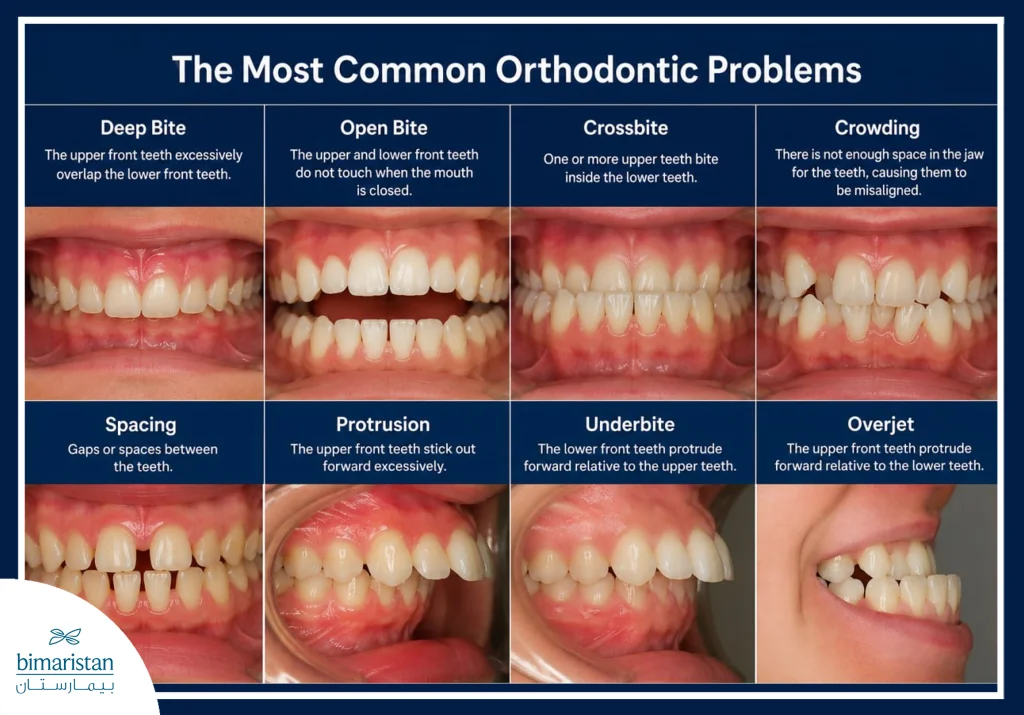
Teeth alignment issues vary from person to person depending on jaw growth, genetic factors, and daily habits. The problem may be minor, affecting only appearance, or more complex, impacting chewing, speech, and overall oral health. The following are the most common malocclusion cases treated by orthodontics:
- ‘Mandibular protrusion: This occurs when the lower jaw protrudes significantly, causing the lower teeth to overlap the upper teeth. This can make it difficult to chew and speak, and can affect the symmetry of the facial features.
- maxillar protrusion: This condition is characterized by a noticeable protrusion of the upper jaw or teeth forward, such that the upper teeth overlap the lower teeth excessively. It is often associated with childhood habits such as thumb-sucking or with genetic factors.
- Open bite: a condition in which the upper and lower front teeth do not meet when the mouth is closed, leaving a noticeable gap between them. This problem may affect speech and the ability to eat.
- Crowded teeth: This occurs when there isn’t enough space inside the jaw for the teeth to align properly, causing them to appear overlapping or crooked. This makes it difficult to clean the teeth and increases the risk of cavities and gum disease.
- Gaps between teeth: These are visible spaces between teeth caused by differences in tooth or jaw size, or by the loss of some teeth. The problem may be purely cosmetic or may affect the stability of the bite.
- Anterior dental malocclusion: This occurs when the front teeth tilt abnormally outward or inward, and is often associated with habits such as tongue thrusting or prolonged thumb-sucking.
- Misalignment of the midline: This refers to a mismatch between the imaginary line separating the upper front teeth and the corresponding line in the lower jaw; it may be caused by differences in jaw growth or tooth misalignment.
Diagnosis of Malocclusion
The diagnosis of malocclusion relies on a comprehensive evaluation of the shape of the teeth and jaws and the function of the bite, to identify the type and severity of the problem and select the appropriate treatment plan. An orthodontist uses several diagnostic tools to accurately assess the condition of the teeth and bones before beginning treatment, the most important of which are:
- Clinical Examination: Diagnosis begins with an in-office examination of the teeth and jaws, during which the dentist evaluates the way the mouth closes, the alignment of the teeth, jaw movement, and facial symmetry. The dentist also notes any issues related to chewing, speech, or tooth wear.
- X-rays and Imaging: Panoramic and cephalometric X-rays are used to analyze the position of the teeth within the bone and to examine the relationship between the upper and lower jaws. These images help identify impacted teeth, jaw growth issues, and the need for orthodontic treatment or surgery.
- 3D Digital Scanning: A modern technology used to create a precise digital model of the teeth and jaws without the need for traditional impressions. This scan helps improve the accuracy of treatment planning and makes the design of orthodontic appliances clearer and more comfortable for the patient.
Types of Orthodontic Treatment
Orthodontic techniques have advanced significantly in recent years, and treatment options have become more diverse to suit different conditions, ages, and cosmetic needs. The orthodontist determines the appropriate type of treatment based on the severity of the malocclusion, the patient’s age, and the need for a long-term cosmetic or functional solution.
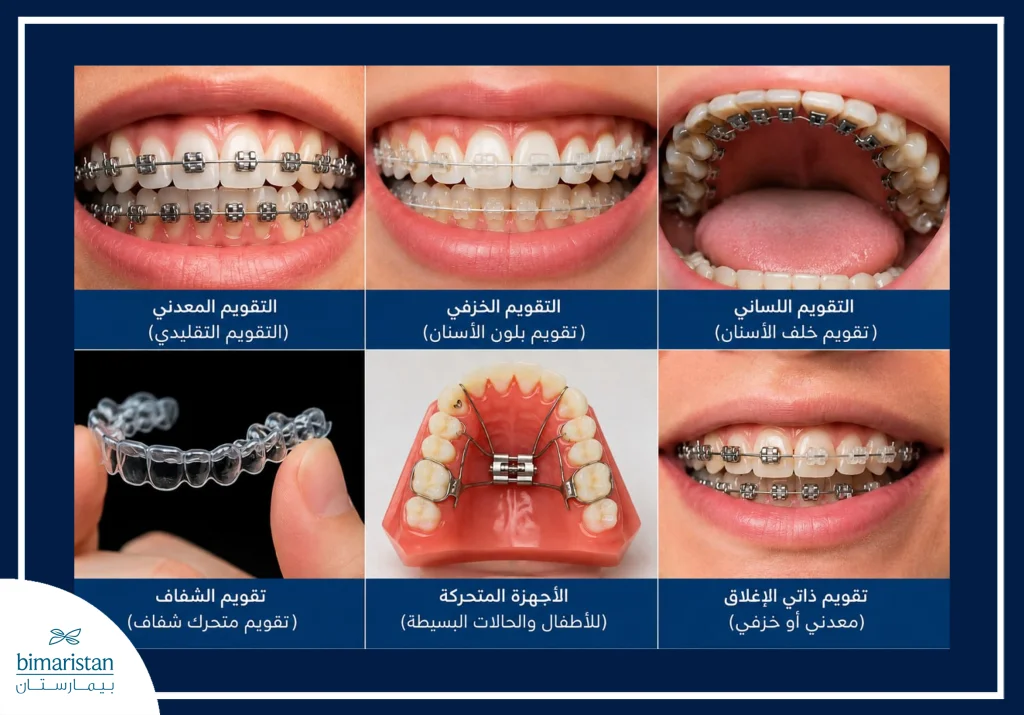
- Metal braces: These are the most common type of braces and consist of metal brackets attached to the teeth and connected by wires that gradually move the teeth into their correct positions. They are highly effective in treating both simple and complex cases and are considered the least expensive option among the types.
- Clear aligners: These rely on a series of custom-made, removable clear trays that are replaced periodically to gradually move the teeth. It is virtually invisible and can be removed while eating and brushing teeth, but it requires daily commitment to achieve the desired results.
- Lingual braces: These resemble traditional metal braces, but are attached to the inner surface of the teeth facing the tongue, making them virtually invisible from the outside. They are often used for people seeking a cosmetic solution while maintaining the effectiveness of fixed braces.
- Self-ligating braces: These use a special mechanism to secure the wires within the brackets, eliminating the need for traditional rubber bands. This helps reduce friction and facilitates tooth movement, and may also shorten the duration of follow-up appointments and reduce discomfort for some patients.
- Headgear: An external device typically used for children and adolescents to help guide jaw growth and correct certain severe malocclusions. It is worn for specific periods of time as determined by the dentist, usually in the evenings or while sleeping.
- Retainer: Used after orthodontic treatment to keep the teeth in their new positions and prevent them from shifting back to their original positions. The retainer may be fixed or removable, depending on the case and the dentist’s recommendations.
| Calendar Type | Aesthetic Aspect | Comfort | The event | Cost |
|---|---|---|---|---|
| Metal Calendar | Low | Medium | High | Low |
| Linguistic Calendar | High | High | Medium | High |
| Transparent Calendar | Not apparent | Low | High | High |
| Self-adhesive calendar | Low | High | High | Medium |
How to Choose the Right Type of Calendar
The choice of orthodontic treatment is not based solely on aesthetics; it is also influenced by medical and functional factors that determine the treatment’s effectiveness and long-term success. After evaluating the condition of the teeth and jaws, the orthodontist recommends the most appropriate option based on several key factors:
- Severity of the condition: Some minor bite issues can be treated with clear aligners, while severe crowding or complex jaw disorders require fixed braces or additional interventions to achieve precise results.
- Patient Compliance: Some types of braces, such as clear aligners, require wearing them for many hours each day and strict adherence to instructions. Poor compliance can directly affect the speed and results of treatment.
- Cost: The cost of different types of braces varies depending on the technique used and the duration of treatment. Metal braces are typically less expensive, while clear or lingual braces are more expensive due to the materials and techniques used.
- Aesthetic preference: Some patients prefer less visible options, such as clear aligners or lingual braces, particularly adults or people whose jobs require a more discreet appearance during treatment.
- Patient Age: Treatment response varies among children, adolescents, and adults due to differences in bone and jaw development. Early intervention in children may help guide jaw growth and reduce the need for complex treatments in the future.
Treatment of Malocclusion by Age
The nature of jaw and bone growth directly influences treatment options, the duration of orthodontic treatment, and expected outcomes. The approach to treating malocclusion also varies by age group; treatment is tailored to age as follows:
- Children: Early intervention may prevent the problem from developing by using protective devices.
- Adolescents: The best time for orthodontic treatment due to bone growth.
- Adults: Treatment may involve orthodontics or surgery in severe cases.
| Age group | Type of treatment | Results |
|---|---|---|
| Children | Protective equipment | Best early results |
| Teenagers | Fixed/transparent brace | High responsiveness |
| Adults | Orthodontics or surgery | By severity |
When is jaw surgery necessary?
Orthognathic surgery is performed when orthodontic treatment alone is insufficient to correct the problem, particularly when there is a significant abnormality in the position or size of the upper or lower jaw. The surgery is often combined with orthodontic treatment, in which braces are used before the procedure to prepare the teeth for their correct positions, and then continued after surgery to adjust the final bite and achieve the best functional and aesthetic results. Conditions that may require surgical intervention include:
- Difficulty chewing or closing the mouth normally
- Speech or breathing problems associated with jaw abnormalities
- A significant discrepancy in the positioning of the upper and lower jaws
- Obvious abnormalities in facial structure or jaw alignment
Tips for Preventing Malocclusion
Although some cases of malocclusion are linked to genetic factors that cannot be completely prevented, adopting healthy habits and monitoring the growth of the teeth and jaws from childhood onward may help reduce the likelihood of the problem developing or limit its severity over time.
- Early treatment of breathing problems: Some cases of mouth breathing or enlarged tonsils can affect jaw and tooth development if left untreated.
- Preventing thumb-sucking: Continuing this habit beyond early childhood may cause the front teeth to protrude or result in an open bite.
- Limit the use of pacifiers and bottles for extended periods: Excessive use may affect jaw development and tooth alignment in children.
- Taking care of your oral and dental hygiene helps prevent tooth decay and gum disease, maintaining the stability of your teeth and the health of the tissues that support them.
- Preserving Baby Teeth: Early loss of baby teeth can cause adjacent teeth to shift, leading to crowding when permanent teeth come in.
- Make sure to have regular dental checkups: visits to the dentist help detect early abnormalities in tooth or jaw development before they become more serious.
- See an orthodontist if you notice any changes, such as crowded teeth, a protruding jaw, or difficulty closing your mouth normally; early intervention often makes treatment easier and faster.
The Cost of Orthodontic Treatment in Turkey
The cost of orthodontic treatment in Turkey varies depending on the type of braces used, the complexity of the case, the required treatment duration, the orthodontist’s experience, and the techniques used at the clinic. Orthodontic treatment in Turkey is a popular choice among many patients thanks to the variety of treatment options and the availability of modern techniques at competitive costs compared to many other countries.
| Type of treatment | Approximate cost |
|---|---|
| Metal Braces Treatment | $1,500–$3,000 |
| Lingual Orthodontic Treatment | $2,000–$4,000 |
| Orthognathic Surgery | $3,000–$5,000 |
| Self-ligating Braces | $1,000–$2,500 |
| Clear, Removable Orthodontic Treatment | $1,000–$2,500 |
| Orthodontics for Children | $1,000–$2,500 |
| Orthognathic Surgery | $10,000–$20,000 |
In conclusion, malocclusion is a common dental problem that can affect a person’s appearance as well as the function of the mouth and jaws; however, significant advances in orthodontic techniques have made available a variety of treatment options suitable for different ages and conditions. The success of treatment depends primarily on early diagnosis and the selection of the appropriate type of orthodontic appliance based on each patient’s condition. Turkey has become a well-known destination for dental and orthodontic treatments thanks to modern technology, a variety of treatment options, and specialized centers offering comprehensive treatment plans for both local and international patients.
Sources:
- National Health Service. (n.d.). Overview of Orthodontics. NHS
- American Association of Orthodontists. (n.d.). American Association of Orthodontists