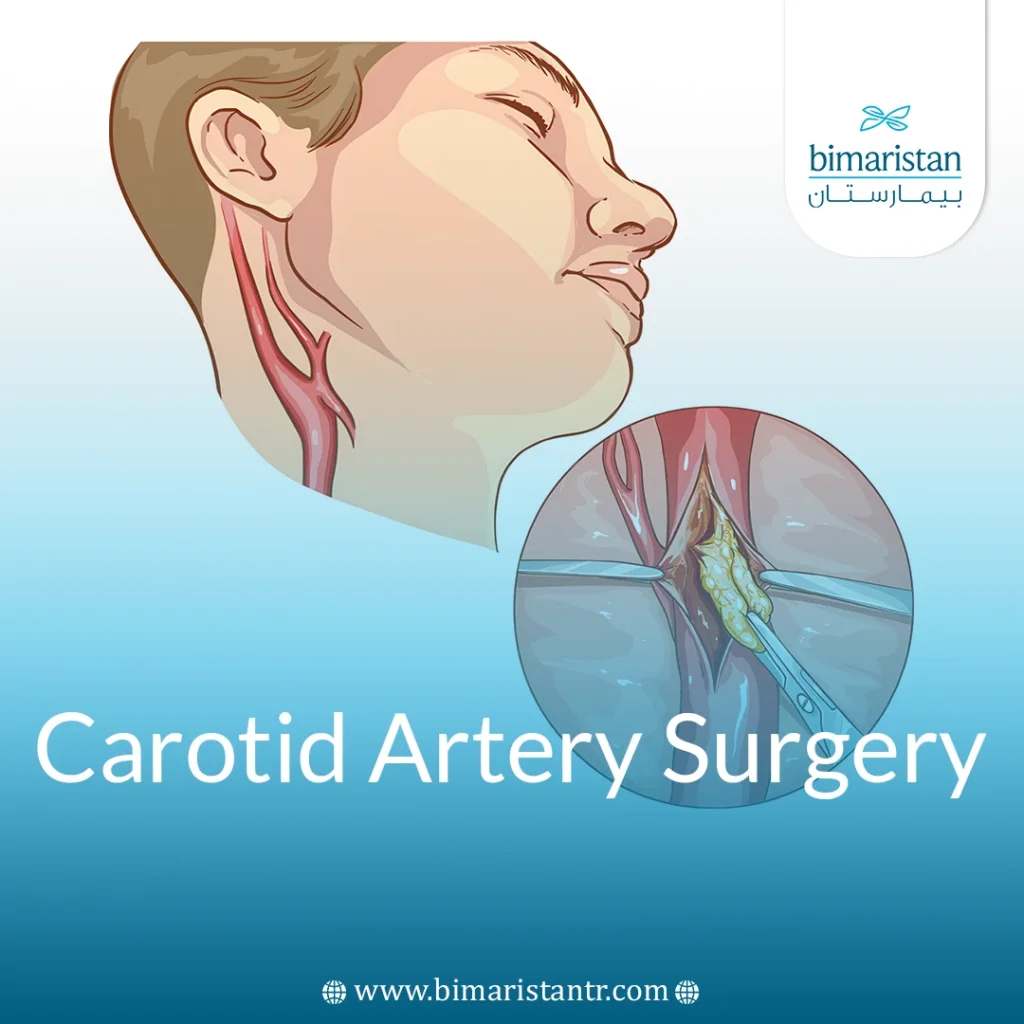
Can a stroke threaten your life without warning? In many cases, the answer is yes. There is a major artery that passes through the neck and supplies the brain with blood called the carotid artery, and when this artery begins to narrow silently, the greatest danger is approaching. Here comes the role of carotid artery surgery, a delicate procedure that may be the difference between life and death. In this article, we review everything you need to know about carotid artery surgery—from its indications to its complications and your recovery from it.
What is the carotid artery, and why is it important?
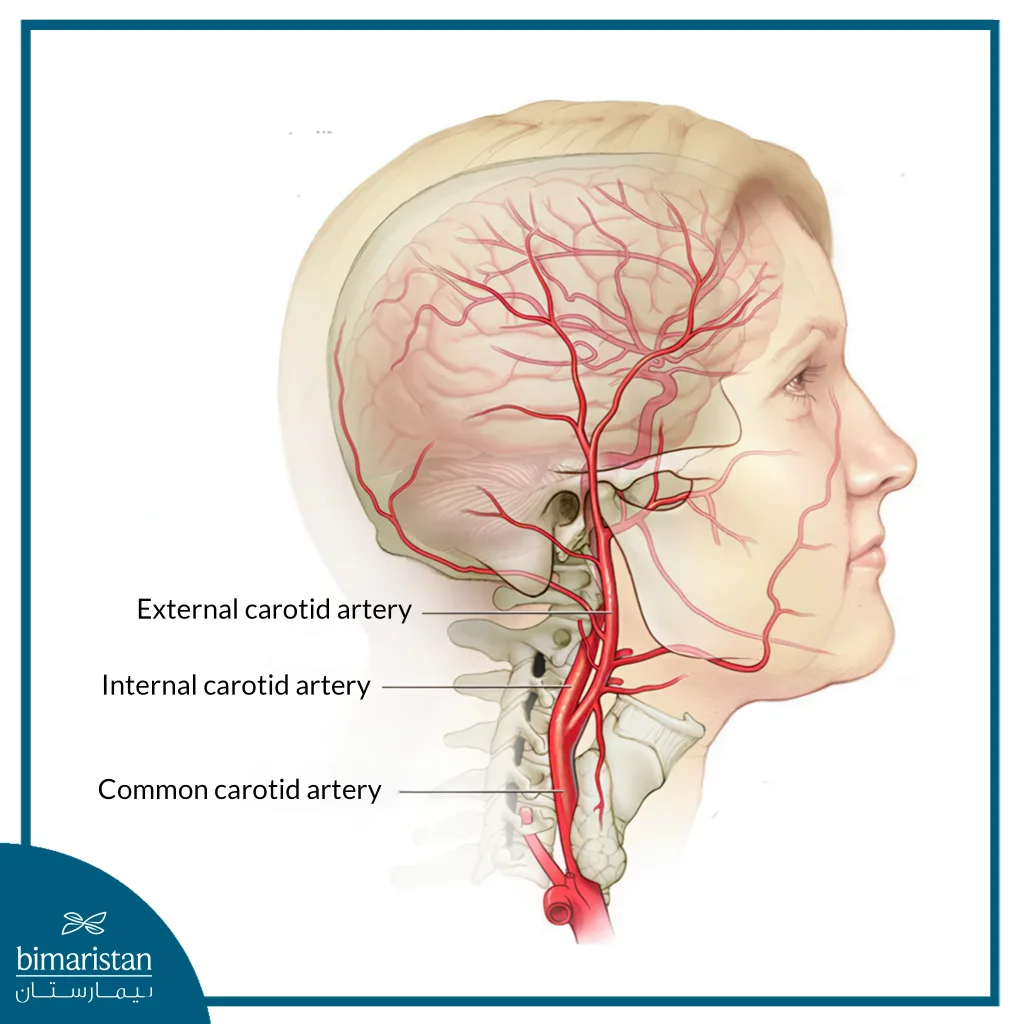
The carotid arteries extend on both sides of the neck and are considered one of the most important blood vessels in the body, as they deliver oxygen-rich blood from the heart to the brain, face and neck, as humans have two common carotid arteries: The left and right carotid arteries, which originate from the upper chest and branch off at the neck level into two arteries: The internal carotid, which feeds the brain, and the external carotid, which supplies blood to the face and neck.
These arteries form a vital network that nourishes all tissues of the head and plays a crucial role in cognitive functions, thinking, movement, and even personality by supplying the front part of the brain with the blood and oxygen it needs. The carotid arteries are also used in clinical examinations to measure the pulse due to their visibility and easy access, especially in emergency situations such as hypovolemic shock, and they contain a sensitive area known as the carotid sinus that includes pressure receptors that monitor and regulate blood pressure and heart rate.
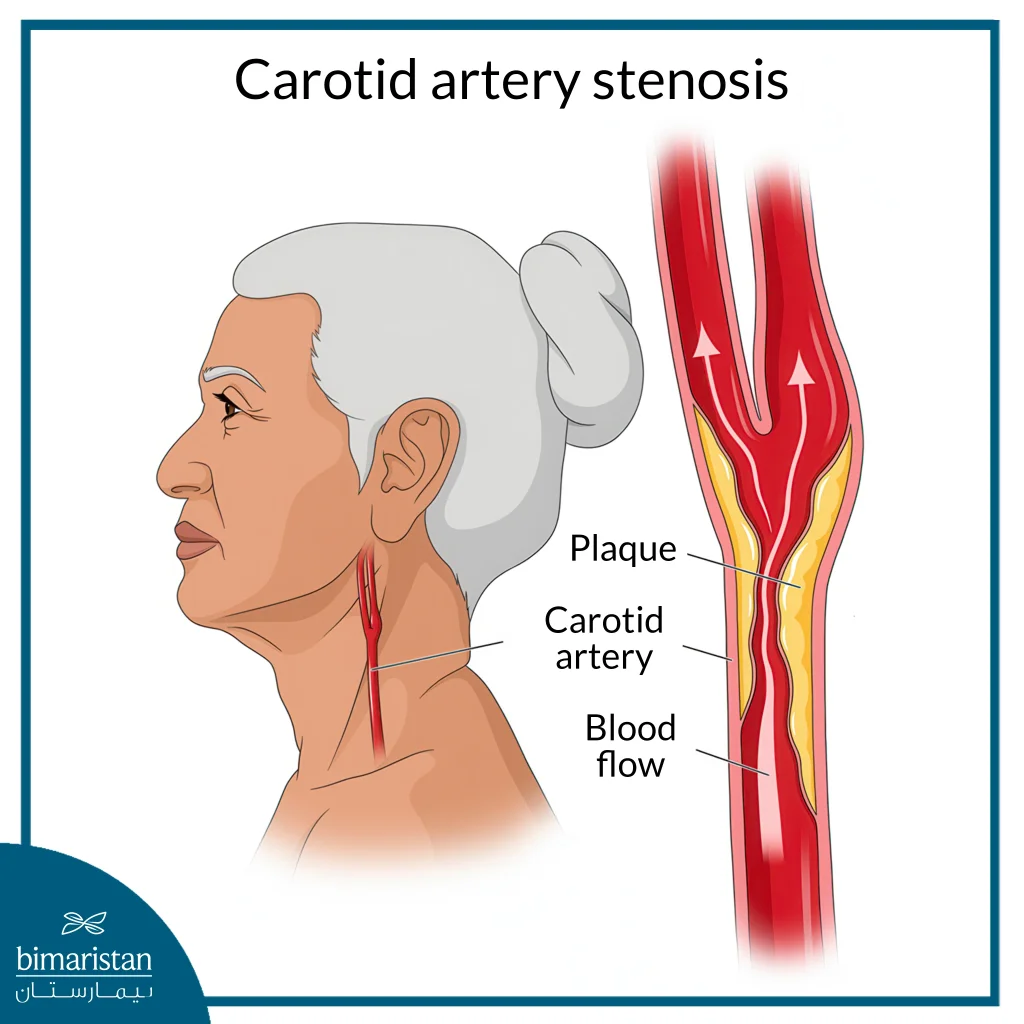
But as with other arteries in the body, the carotid arteries can be subject to health issues, most notably carotid artery stenosis, a partial or total blockage often caused by atherosclerosis, the buildup of fatty plaques on the inner walls of the artery. This stenosis may limit blood flow to the brain and increase the risk of stroke. Usually diagnosed using Echo Doppler, and in severe cases, doctors may resort to carotid artery surgery to remove the blockage and restore normal blood flow.
In short, the carotid arteries are not just blood-carrying vessels; they are the lifeline between the heart and the brain, and any malfunction can have serious neurological consequences, making awareness of their anatomy and diseases—and the role of carotid artery surgery—a health necessity that cannot be ignored.
What is carotid artery stenosis?
Carotid artery stenosis is a condition that occurs when fatty deposits known as plaques build up within the walls of the carotid artery, one of the large arteries on either side of the neck. These deposits reduce the flow of oxygen-rich blood to the brain, significantly increasing the risk of stroke.
A stroke is a medical emergency that occurs when blood flow to the brain stops or drops sharply, preventing oxygen and nutrients from reaching brain cells. Within minutes, cells begin to die, which can lead to permanent brain damage or death. In some cases, a transient ischemic attack (TIA), a temporary loss of blood flow, may be the first sign of an issue with the carotid artery.
Carotid artery stenosis is one of the leading causes of stroke, one of the most common causes of death and disability around the world. Fortunately, this disease can be prevented and treated through a range of measures such as: Lifestyle changes, lipid-lowering medications, blood pressure control and, in some cases, surgery to remove the blockage and restore normal blood flow.
Risk factors for carotid artery stenosis
- Diabetes: Impairs the body’s ability to process fat, raising blood pressure, and hardening the arteries
- Family history: Previous cases of atherosclerosis or heart disease in the family
- Sleep apnea: Associated with increased risk of carotid artery disease
- Obesity: Leads to high blood pressure, high cholesterol, and increased other risk factors
- Smoking: Damages the lining of blood vessels and increases blood pressure, and plaque formation
- High blood pressure: Weakens artery walls and increases the likelihood of damage
- Ethnicity: Some ethnic groups may be more likely to be affected
- High cholesterol: Contributes to plaque buildup in the arteries
- Kidney disease: May lead to high blood pressure and heart issues
- Aging: The likelihood of infection increases with age
- Lack of physical activity: Contributes to obesity, high blood pressure, and diabetes
When is carotid artery surgery needed?
Carotid artery surgery, whether endarterectomy or stenting, is recommended in cases of severe carotid artery stenosis, especially when the blockage is caused by fatty plaque buildup inside the artery, which impedes blood flow to the brain and increases the risk of stroke:
Severity of stenosis: When the artery is 70% or more blocked, with or without symptoms, this is a strong indication for carotid artery surgery. In cases of moderate stenosis (50% to 69%), surgery may also be considered.
Symptoms or history: A history of stroke or transient ischemic attack (TIA) increases the likelihood of future stroke. Therefore, carotid artery surgery is often recommended even with moderate stenosis. Symptoms such as weakness, numbness, difficulty speaking, or visual disturbances are clinical signals for intervention.
General health status and age: The patient’s overall health, comorbidities, and life expectancy are considered to weigh the benefits of carotid artery surgery against its risks.
An individualized, customized approach: There is no one-size-fits-all decision. Each case is assessed individually based on the degree of stenosis, medical history, current health status, and patient preferences.
It is important to note that carotid artery surgery is not recommended for people with mild stenosis (less than 50%) because the risks may outweigh the benefits. Additionally, surgery is not feasible in cases of complete blockage of the artery. In summary, carotid artery surgery is most beneficial in cases of severe stenosis (70–99%), especially in patients with prior neurological symptoms or high risk factors.
Types of carotid artery surgery
Carotid artery surgery encompasses two primary procedures used to treat stenosis and restore blood flow to the brain: carotid endarterectomy and carotid artery stenting. Both procedures aim to reduce the risk of stroke by removing the plaque that narrows the blood flow within the artery.
Carotid endarterectomy
It is the most common surgical option, where the surgeon makes an incision in the neck to access the narrowed artery, then carefully opens it and removes the plaque deposited on its walls, after removing these deposits, the artery is re-closed using sutures or a special patch made from a natural vein or an artificial material to reinforce the inner wall of the artery. This procedure has proven to be effective in preventing strokes, especially in patients with severe carotid artery stenosis. However, the procedure is not without some potential risks, such as infection, clot formation, or complications resulting from anesthesia.
Carotid artery stenting
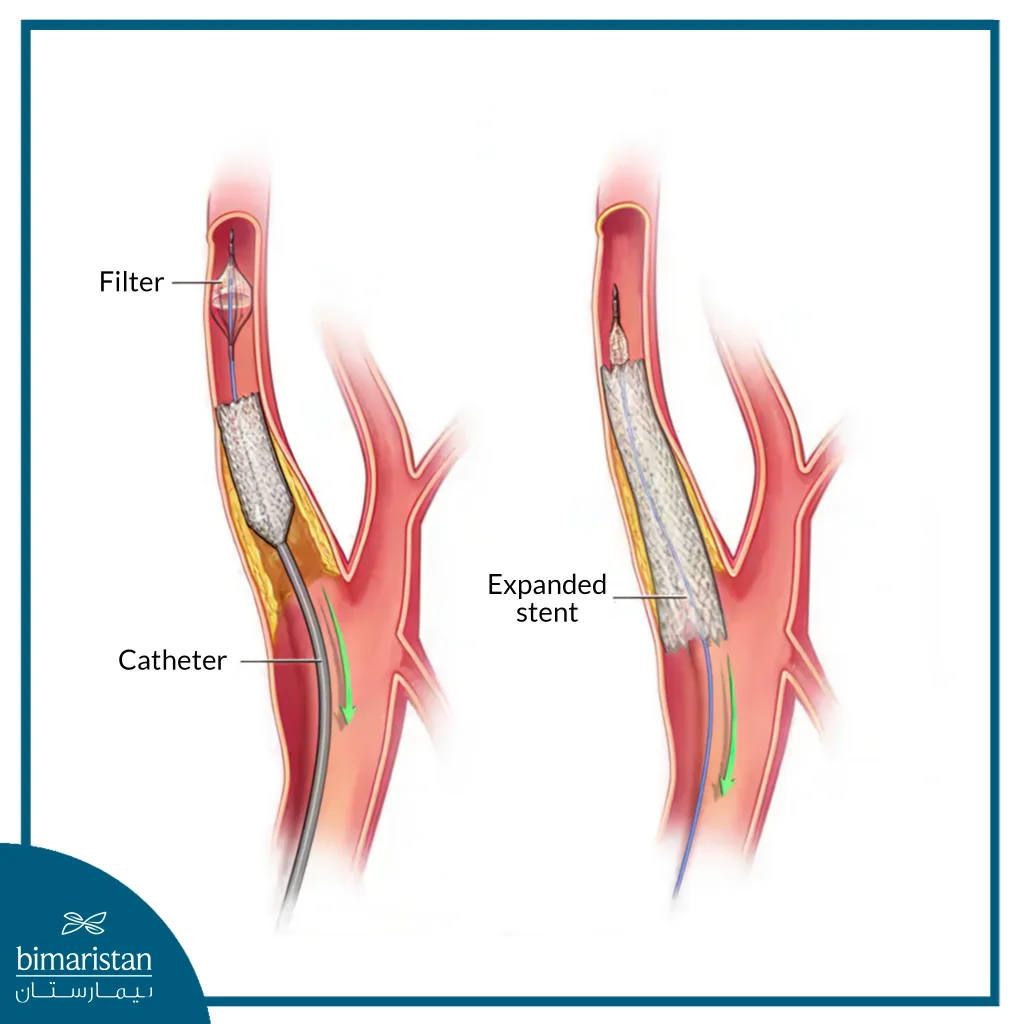
In this procedure, the doctor inserts a thin catheter through an artery in the thigh or arm and guides it to the area of narrowing in the carotid artery. After that, a small balloon is inflated to widen the artery, and then a metal stent (a small flexible mesh) is placed inside it to keep it open and prevent re-clogging. The entry point for this type of procedure varies depending on the case; it may be through the thigh, arm, or even directly from the neck above the collarbone.
The choice of the type of procedure is determined based on a thorough evaluation of the patient’s condition, including the degree of stenosis, general health status, the exact location of the blockage, and the patient’s tolerance for surgery. Ultimately, both carotid artery surgery techniques—endarterectomy and stenting—aim to improve cerebral blood flow and prevent serious complications such as stroke.
Risks and complications of carotid artery surgery
As with any surgical procedure, carotid artery surgery involves a range of risks and potential complications that can vary in severity from minor to serious.
- Stroke: It is the most common and most serious complication, as it may occur during or after surgery as a result of blood clots, bleeding, or damage to blood vessels.
- Nerve damage: Nerves near the carotid artery may be damaged, causing temporary or permanent issues with speech, swallowing, and sensation.
- Heart attack: The stress of surgery and anesthesia can lead to a heart attack, especially in heart patients.
- Blood clots: They can form inside an artery and travel to the brain, causing a stroke.
- Brain hemorrhage: Internal bleeding may occur, leading to serious neurological complications.
- Return of stenosis: The artery can narrow again some time after surgery.
- Infection: Possible infection at the surgical site.
How do you prepare for carotid artery surgery?
Preparing for carotid artery surgery is an essential step to ensure the safety of the procedure and minimize the chances of complications. It is necessary to start by informing the doctor of all medications taken, whether prescription or non-prescription, including vitamins, supplements, and herbal products, as some medications—especially blood thinners such as aspirin or warfarin—may need to be adjusted or temporarily stopped before the procedure.
Full disclosure of medical history, including any allergies or chronic diseases, is required to assess suitability for carotid artery surgery and determine the best methods of anesthesia and intraoperative care. Before surgery, a series of tests, including an MRI or CT scan of the carotid arteries, blood tests, an EKG, and a chest x-ray, may be ordered to accurately assess your overall health status.
It is also important to stop smoking before carotid artery surgery, as it negatively affects blood flow and increases the risk of complications. Specific instructions are usually given about not eating or drinking the night before surgery. On the morning of the operation, it is requested to shower with a special disinfectant, avoid using cosmetics, deodorants, or nail polish, and remove all jewelry, contact lenses, and any personal items.
Post-surgical recovery
Recovery after carotid artery surgery, whether endarterectomy or stenting, goes through several stages, starting in the hospital and extending to home during the following weeks. Usually, the patient spends one to three days in the hospital, often including one day in the intensive care unit for close monitoring. During this period, it is recommended to rest and avoid excessive head movement, especially in the first days after surgery, and the doctor may prescribe anticoagulant medications such as aspirin or clopidogrel to reduce the risk of a clot.
It is normal for the patient to feel some pain in the neck or sore throat, as well as slight bruising or swelling around the surgical site, but these symptoms usually disappear within one to two weeks. Upon returning home, it is recommended to start practicing light activities gradually, such as walking or reading, while avoiding lifting weights or strenuous exercises for at least one to two weeks, and driving is only allowed after the doctor’s evaluation and making sure that the health condition allows it.
During the recovery period, it is important to keep follow-up appointments with the doctor to monitor blood flow and improvement of the condition, adhere to taking medications as directed, eat a healthy diet, drink plenty of water, and take care of the wound site.
Carotid artery surgery is an effective procedure to prevent strokes in patients with stenosis of the carotid arteries. With medical advances and the development of surgical techniques, the results have become safer and more accurate, but early diagnosis, careful evaluation of each case, and commitment to postoperative care remain critical elements for successful carotid artery surgery and improved quality of life for patients.
Sources: