
Cancer treatment is constantly evolving with the emergence of modern techniques aimed at achieving a delicate balance between treatment efficacy and the preservation of healthy tissue surrounding the tumor. Cancer treatment with linear accelerator (LINAC) represents one of the most advanced forms of radiation therapy, enabling the precise delivery of high-energy radiation beams to targeted areas while leveraging sophisticated treatment planning and delivery techniques tailored to the tumor’s type and location.
Recent advances in linear accelerators and related treatment technologies have expanded the possibilities for radiation therapy in treating various cancers. As a result, choosing the appropriate technique and developing an accurate treatment plan has become crucial in cancer care, which relies on a thorough assessment of the patient’s condition by an oncology team.
What is a linear accelerator (LINAC)?
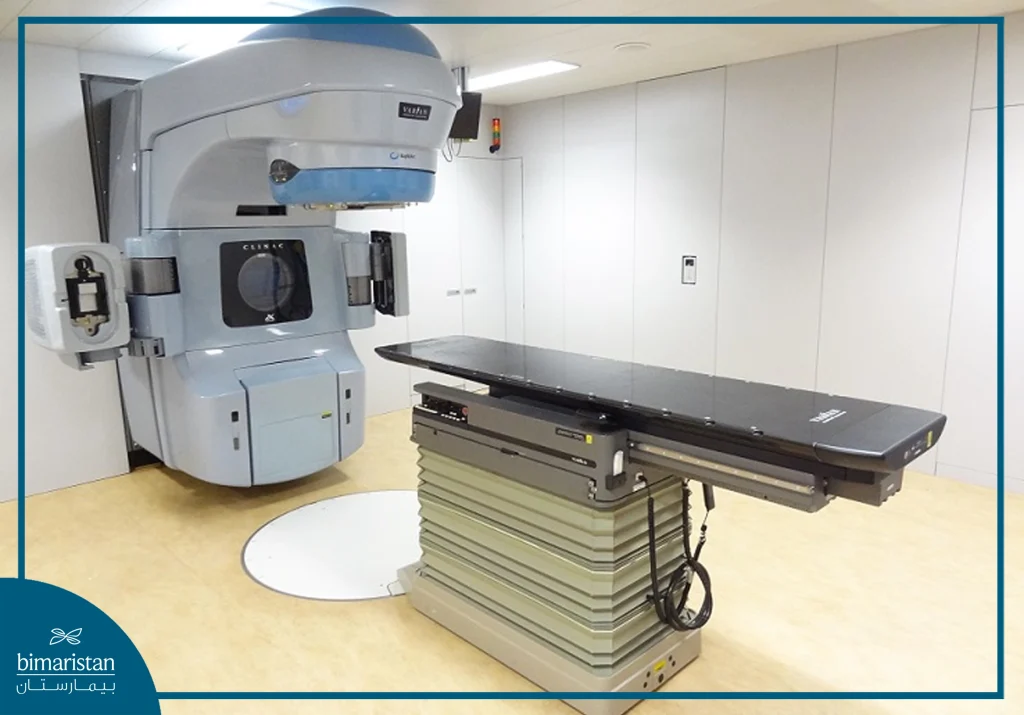
A linear accelerator (LINAC) is an advanced medical device used in radiation therapy for cancer. It accelerates electrons to high energies and then uses them to produce high-energy radiation beams, such as X-rays, which are precisely directed toward the target area inside the body. The linear accelerator helps deliver a radiation dose to the tumor according to a treatment plan tailored specifically for each patient, while minimizing the radiation exposure to surrounding healthy tissue as much as possible.
The device is designed to work with advanced treatment techniques that provide precise control over the direction and intensity of the radiation beam, tailored to the tumor’s location and size. The linear accelerator can treat various types of cancer and can be integrated into a treatment plan aimed at eliminating the tumor, reducing its size, controlling its growth, or alleviating symptoms. The approach depends on the specific type and stage of cancer, as well as the treatment plan developed by the radiation oncology team.
How does a linear accelerator work?
A linear accelerator works by accelerating electrons to high energies using electromagnetic waves at microwave frequencies. The electrons travel through a tube called a waveguide, where they interact with the electromagnetic field and gain energy as they move through the device. After the electrons are accelerated, the linear accelerator can use the electron beam directly to treat certain superficial tumors, or direct it toward a metal target, typically made of tungsten. When high-energy electrons collide with the target, they produce high-energy X-rays, the most commonly used form of radiation produced by a linear accelerator for treating deep-seated tumors.
After the radiation beam is generated, it travels to the machine’s head, which houses components responsible for controlling and shaping the beam. A key component is the multi-leaf collimator, consisting of movable metal leaves that can be repositioned to shape the radiation field to match the treatment area; this allows the therapeutic dose to be concentrated on the target while minimizing radiation exposure to surrounding healthy tissues. The linear accelerator also includes systems to control beam energy, dose, and direction, while the rotating gantry enables the radiation beam to be directed from various angles around the patient. Together, these components produce a radiation beam with precisely controllable characteristics tailored to the requirements of the treatment plan.
When high-energy X-rays reach tissues, they cause ionization that damages the genetic material (DNA) inside cells. Cancer cells, often characterized by rapid division and a reduced ability to repair certain types of damage, are more susceptible to radiation. The accumulation of damage to genetic material (DNA) impairs cancer cells’ ability to divide and multiply and may ultimately lead to their death.
What types of cancer can be treated with a linear accelerator?
A linear accelerator (LINAC) can be used in radiation therapy for a wide range of cancers, as it allows high-energy radiation beams to be directed at tumors in various parts of the body. The decision to use a linear accelerator depends on the type, location, size, and stage of the cancer, as well as the patient’s overall health and treatment goal. Among the most common types of cancer treated with a linear accelerator are:
- Breast cancer
- Prostate cancer
- Lung cancer
- Brain and central nervous system tumors
- Head and neck cancers
- Esophageal cancer
- Pancreatic cancer
- Rectal cancer
- Skin cancer and certain soft tissue tumors
- Metastases or tumors that have spread to specific areas of the body, in selected cases
Radiation therapy using a linear accelerator may be used as the primary treatment for certain tumors, after surgery to reduce the risk of cancer recurrence, or in conjunction with other treatments such as chemotherapy. It can also be used to relieve certain symptoms caused by advanced tumors.
What radiation therapy techniques are used with a linear accelerator (LINAC)?
A linear accelerator (LINAC) is capable of delivering several advanced radiation therapy techniques. These techniques utilize various methods for planning, shaping, and administering the radiation beams produced by the linear accelerator. The selection of the appropriate technique depends on the tumor’s location, size, shape, and its proximity to surrounding healthy organs and tissues. Among the most prominent techniques are:
Intensity-Modulated Radiation Therapy (IMRT)
Computer-controlled linear accelerators are used to deliver radiation with greater precision by adjusting the intensity of the radiation beam in different areas of the treatment field. This allows the dose to better match the tumor’s three-dimensional shape while reducing the dose delivered to nearby healthy organs. A common example is its use in treating head and neck cancers, where tumors are located near sensitive organs that require greater protection.
Volumetric Modulated Arc Therapy (VMAT)
It is a form of intensity-modulated radiation therapy in which the linear accelerator delivers a radiation dose continuously as the gantry rotates around the patient. During rotation, several factors change simultaneously, including the position of the multi-leaf collimator, the dose rate, and the machine’s rotation speed, allowing the dose distribution to be shaped according to the treatment plan. VMAT is effective for treating various types of tumors, such as prostate cancer, as well as other tumors that require precise dose distribution around sensitive organs.
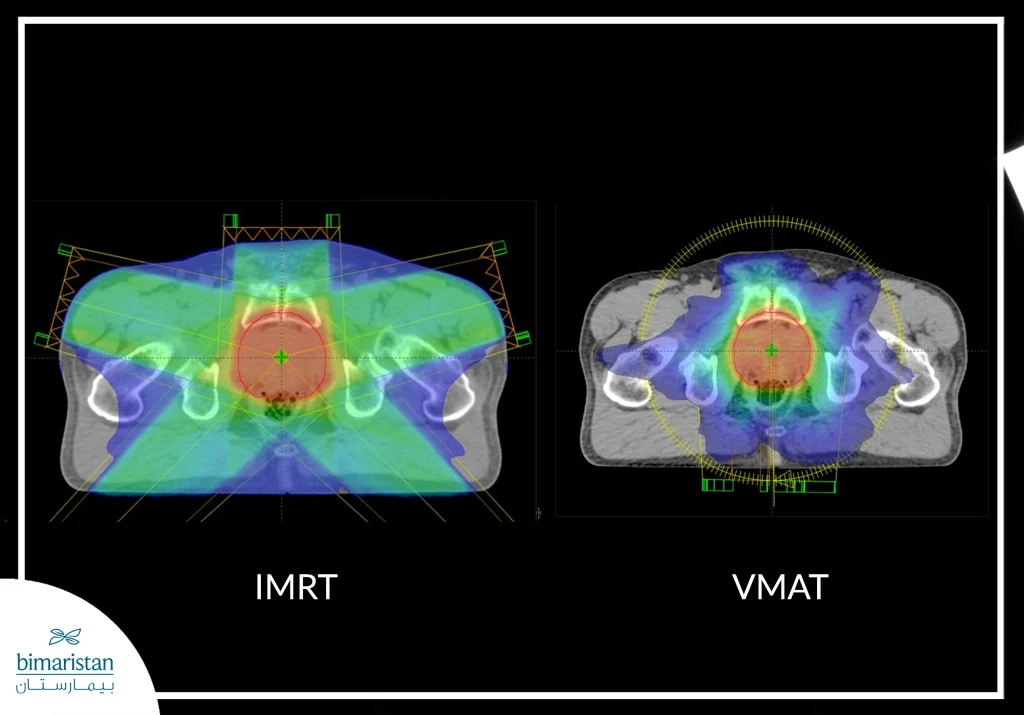
Image-Guided Radiation Therapy (IGRT)
Image-guided radiotherapy is not a method for altering radiation intensity; rather, it is an imaging-based technique designed to improve the accuracy of tumor localization and treatment delivery. It uses modalities such as CT scans, X-rays, or, in certain systems, technologies like MRI-LINAC to verify the target position before or during treatment and make necessary adjustments. This approach is especially important for tumors susceptible to movement from respiration or organ motion, such as those in the lung, liver, and pancreas, and it can be integrated with other techniques like IMRT and SBRT.
Stereotactic Body Radiation Therapy (SBRT)
Stereotactic Body Radiation Therapy (SBRT) is a high-precision radiation therapy that delivers high doses to small, specific tumors in various parts of the body and is typically delivered over fewer sessions than some conventional radiation therapy. A linear accelerator (LINAC) can deliver this type of treatment using advanced techniques to locate the tumor and precisely direct the radiation. One of its most prominent applications is the treatment of early-stage lung cancer when the tumor is localized. It can also be used in selected cases of prostate, liver, and bone tumors.
Stereotactic Radiosurgery (SRS)
Despite its name, Stereotactic Radiosurgery (SRS) is not a surgical procedure in the conventional sense; rather, it is a form of stereotactic radiotherapy that delivers a high, focused dose of radiation to a small target. While similar to Stereotactic Body Radiation Therapy (SBRT), it differs in its application, as it is primarily used to treat tumors and lesions in the brain and central nervous system.
How is cancer treated with a linear accelerator?
Linear accelerator (LINAC) treatment begins with an assessment of the patient’s condition and suitability for radiation therapy, taking into account the results of prior examinations. Next, the team performs imaging tests to precisely locate the tumor and target area and identify surrounding healthy organs and tissues that require protection. Based on this information, the oncology team develops a personalized treatment plan specifying the appropriate radiation dose, the number of sessions, the dose distribution method, and the orientation of radiation beams. Precise dose calculations are performed by a medical physicist and a treatment planning specialist to ensure the plan aligns with the treatment prescription, and the treatment is divided into multiple sessions known as fractions.
At the start of each session, the patient is positioned on the treatment table; immobilization devices may be used to ensure stability. The LINAC’s moving gantry rotates around the patient to deliver radiation to the specific points defined in the treatment plan. Throughout the procedure, the patient remains lying down and still, breathing normally in most cases, while the team monitors the patient from outside the room via a recording and audio communication system. The treatment is painless and involves no physical sensation; sessions are brief, and in most cases, the patient returns home immediately afterward.
What are the benefits of cancer treatment with linear accelerator?
Linear accelerator therapy offers several benefits that make it an important option in cancer treatment. Among the most notable of these benefits are:
- It eliminates the need for surgery, reducing recovery time and the risks associated with surgery
- It delivers radiation with extremely high precision, allowing for accurate targeting of the tumor while preserving the surrounding healthy tissue
- Some linear accelerator systems enable the use of advanced imaging techniques to verify the positions of the tumor and the patient during the session, allowing for necessary adjustments to ensure the radiation is precisely directed at the target area
- Treatment time is relatively short; sessions are typically brief, as the actual delivery of radiation may take only a few minutes
- It can be used in conjunction with other treatments, such as surgery and chemotherapy, as part of a comprehensive treatment plan
What are the side effects of cancer treatment with linear accelerator?
The side effects of linear accelerator (LINAC) therapy vary from patient to patient and depend primarily on the area receiving radiation, the dose administered, and the patient’s overall health. Some side effects occur because radiation affects healthy cells in the treatment area. They may appear gradually during treatment or shortly after it ends. Common side effects include fatigue and exhaustion, as well as skin changes in the treated area, such as redness, dryness, or irritation. Hair loss may also occur in the area exposed to radiation.
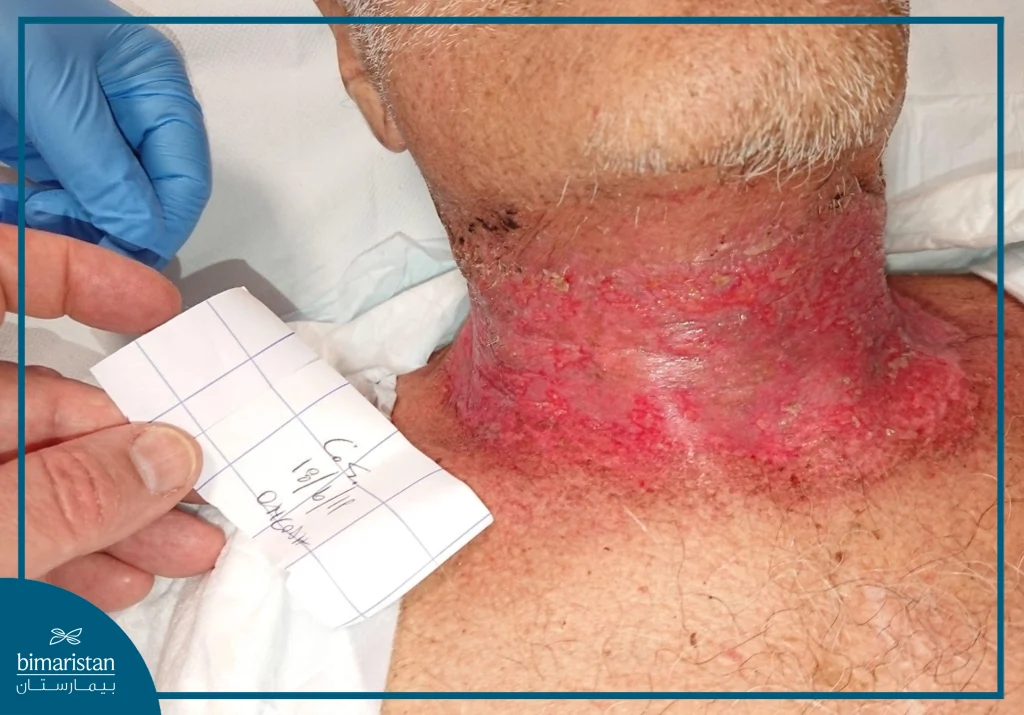
Other symptoms vary by treatment site; patients treated in the head and neck may experience dry mouth or difficulty swallowing, while those treated in the abdomen or pelvis may experience gastrointestinal symptoms such as nausea or diarrhea. Late side effects may also occur in some cases; they can appear months or years after treatment ends, and their nature varies by treated area and radiation dose.
In conclusion, linear accelerator therapy provides advanced capabilities for delivering radiation treatment with high precision. It also allows the use of various techniques tailored to the tumor type and location, as well as each patient’s individual needs. As radiation therapy equipment and planning technologies continue to improve, selecting the right medical center has become a crucial part of the treatment journey. This choice, along with the medical team’s expertise and access to modern technologies, plays a significant role in achieving the best outcomes.
Turkey is one of the destinations many patients turn to for specialized cancer care, with centers equipped with state-of-the-art radiation therapy technologies and multidisciplinary medical teams. When considering linear accelerator therapy, a comprehensive medical evaluation at a specialized center helps patients understand their options and determine the most appropriate technique and treatment plan for their condition.
Sources: